















Digestive enzymes are specialised proteins that our body naturally produces in the digestive tract (e.g. in the salivary glands, stomach, pancreas and small intestine). Their main role is to break down complex molecules in food (proteins, fats and carbohydrates) into smaller components, which the body can then absorb through the intestinal walls into the bloodstream and use as energy or building blocks.

If the body does not produce enough enzymes (for example, due to stress, ageing, an unhealthy lifestyle or illness) and food remains undigested in the digestive tract for longer, this causes fermentation, bloating, a feeling of heaviness and poor nutrient absorption. In such cases, people often turn to dietary supplements. If you suffer from stomach ulcers, inflammation of the digestive tract, pancreatic disorders or are taking medication that affects digestion and absorption, we recommend consulting a doctor before use.
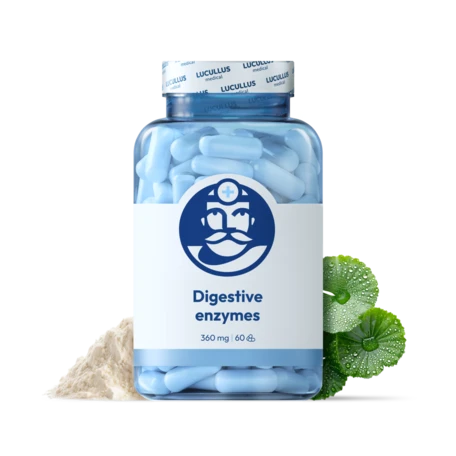
Dr LUCULLUS Digestive Enzymes
The digestive enzymes contain a patented blend of seven specific enzymes. These enzymes work together, but each one targets a different type of food:
1. Enzymes that break down carbohydrates and sugars
Amylase: It is naturally present in our saliva and in the pancreas. Its role is to break down complex carbohydrates (starches found, for example, in potatoes, rice and pasta) into simpler sugars, from which the body derives quick energy.
Maltase: Completes the work of amylase. It breaks down maltose (malt sugar, which is produced, for example, during the digestion of cereals) into glucose, which the body uses as fuel.
Saccharase: It breaks down sucrose (ordinary white or beet sugar) into simple sugars – glucose and fructose. This aids digestion after eating sweet foods.
2. Enzymes for breaking down proteins and fats
Protease: A key enzyme responsible for breaking down proteins (from meat, eggs, pulses or milk) into smaller units called peptides and, subsequently, into amino acids. Amino acids are absolutely essential for the growth, repair and regeneration of muscles, organs and tissues.
Lipase: This enzyme, produced mainly by the pancreas, is essential for breaking down fats (lipids) into glycerol and free fatty acids. Without sufficient lipase, the body struggles to digest fatty foods, which often leads to a severe feeling of heaviness.
3. Enzymes targeting specific intolerances and food components
Lactase: Breaks down lactose (milk sugar) found in milk and dairy products. Many people gradually lose the ability to produce their own lactase, which leads to lactose intolerance (cramps, diarrhoea and bloating after consuming milk). Taking lactase as a supplement prevents this from happening.
Cellulase: The human body cannot naturally produce this enzyme. It breaks down cellulose, which is the main component of plant fibre (found in vegetables and fruit). Taking cellulase supplements helps to soften and break down the plant-based components of food, enabling the body to extract more nutrients from them and reducing the risk of flatulence caused by high fibre intake.
Safety and health recommendations
Timing: For best results, digestive enzymes should ideally be taken just before or with a meal, as they come into contact with food in the stomach straight away and can begin to break it down immediately.
Allergies and ingredients: Although the enzymes themselves are generally well tolerated, it is important to check the additives if you are keen to avoid any animal-derived products.

When to aid digestion
How can you tell if your digestive system needs a boost? The most common signs include:
A feeling of heaviness in the stomach: You may experience this as an unpleasant feeling of fullness after eating a normal, and sometimes even smaller, portion of food. This feeling lasts for a long time.
Bloating and flatulence: Increased gas production after a meal is a common sign of digestive problems.
Post-meal tiredness: If your body ‘shuts down’ and you start to feel drowsy shortly after eating, this may indicate that your body is expending a great deal of energy to break down the food you have eaten.
Specific reactions: If you regularly feel unwell after drinking milk, eating pulses or consuming fatty foods, this may indicate a deficiency of a specific enzyme (e.g. lactase, lipase).
Irregular bowel movements: Frequent diarrhoea, constipation and undigested food particles in the stools.
High stress: When under stress, our body prioritises ‘survival’, which is why the production of stomach acid and enzymes is reduced.
Gulping down food: If you don’t chew your food properly, it isn’t broken down sufficiently by saliva, and this puts a strain on the intestines, which then have to work harder to catch up.
Occasional consumption of heavier meals: Particularly during family celebrations and public holidays, when we consume large amounts of fat, protein and sugar all at once.
Age: Between the ages of 30 and 40, our body’s natural production of enzymes begins to decline.
Our body usually tells us very clearly what it needs. If you only experience a feeling of heaviness, tiredness or bloating after a meal from time to time, high-quality digestive enzymes from Dr LUCULLUS are a great and quick first-aid remedy to restore your comfort. However, if you feel that you’re struggling with digestion on a regular and long-term basis, it’s certainly wisest to consult a doctor so that you can once again enjoy life and food without fear or restrictions.