














SUPPLEMENTATION 101: Stress and Sleep Hygiene
Why do you wake up feeling tired even after 8 hours in bed?

Add 4 more products to your cart and get 15% off your entire purchase!
 Harmony
Why do you wake up feeling tired even after 8 hours in bed?
 Digestion and Detox
For some of us, fast food and that feeling of heaviness go hand in hand. So you opt for a healthier option – perhaps with an egg, seeds and plenty of fibre – and expect to feel the difference. But instead, do you feel as though you’ve swallowed a boulder? Your trousers start to feel tight, your tummy swells up and your energy levels drop so sharply that you find yourself thinking about your third coffee of the day and feeling physically irritable. Does this sound familiar?
 Beauty and Skin
You know how it is. A chilly morning rolls round, your throat feels a bit scratchy, and your hand automatically reaches into the cupboard for a remedy. But instead of a big, hard-to-swallow tablet, you pull out a fragrant orange-flavoured jelly sweet or a refreshing lozenge. It tastes great. So, an hour later at your computer, you have another one. And another in the afternoon – after all, it’s ‘just a vitamin to boost your immunity’.
Beauty and Skin
You know how it is. A chilly morning rolls round, your throat feels a bit scratchy, and your hand automatically reaches into the cupboard for a remedy. But instead of a big, hard-to-swallow tablet, you pull out a fragrant orange-flavoured jelly sweet or a refreshing lozenge. It tastes great. So, an hour later at your computer, you have another one. And another in the afternoon – after all, it’s ‘just a vitamin to boost your immunity’.
 Energy
The alarm goes off in the morning. My first thought isn’t of the new day, but of the espresso machine. At two in the afternoon, the familiar mental slump sets in, so a second – perhaps even a third – cup follows. But instead of a surge of fresh creativity and alertness, all that comes is a pounding heart, a slight trembling of the fingers and that strange combination where the body is tense but the brain remains shrouded in a thick fog.
Energy
The alarm goes off in the morning. My first thought isn’t of the new day, but of the espresso machine. At two in the afternoon, the familiar mental slump sets in, so a second – perhaps even a third – cup follows. But instead of a surge of fresh creativity and alertness, all that comes is a pounding heart, a slight trembling of the fingers and that strange combination where the body is tense but the brain remains shrouded in a thick fog.
 Health
If you ask any athlete (especially endurance athletes) what nutritional supplement they always have with them for competitions, the most common answer will be "magnesium". Magnesium is definitely one of the most important minerals for our body. It is a so-called "deficiency" mineral because we excrete it from the body during excessive exertion, but also when we are not exercising! Just living in a noisy, stressful, demanding environment is enough...
 Immunity and Vitality
Apple cider vinegar is one of the most popular natural products with a wide range of health benefits. Apple cider vinegar has been sought after for centuries for its health effects, including promoting digestion, regulating weight, maintaining stable blood sugar levels, and improving cardiovascular health.
 Immunity and Vitality
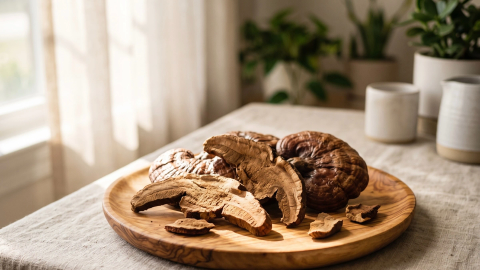
Reishi, a mushroom used as far back as 4,000 years ago. The divine mushroom of immortality – in the past, it was believed to be able to revive even the dead. It has a particularly important place in Chinese medicine (under the name lingzhi), where it was first mentioned in writing 200 years before Christ. An entire army was assigned to search for it, because the Chinese imperial court believed that it could be used to mix an elixir of immortality. The Slovak name probably does not mean much to you - Leskokôrovka hnedočervená, it is actually a wood-destroying parasitic fungus that lives mainly on injured trees. It has a huge spectrum of biological substances. Its effects are also described in the professional encyclopaedia Huby ako .
Immunity and Vitality
Reishi, a mushroom used as far back as 4,000 years ago. The divine mushroom of immortality – in the past, it was believed to be able to revive even the dead. It has a particularly important place in Chinese medicine (under the name lingzhi), where it was first mentioned in writing 200 years before Christ. An entire army was assigned to search for it, because the Chinese imperial court believed that it could be used to mix an elixir of immortality. The Slovak name probably does not mean much to you - Leskokôrovka hnedočervená, it is actually a wood-destroying parasitic fungus that lives mainly on injured trees. It has a huge spectrum of biological substances. Its effects are also described in the professional encyclopaedia Huby ako .
 Immunity and Vitality
Imagine that your body is a factory working at full capacity (to provide energy, growth, cell repair) and iron is the fuel that keeps it running. If iron reserves are depleted, you may experience weakness, heart palpitations or paler skin. Symptoms of iron deficiency include brittle nails, dry hair, shortness of breath, sleep problems, reduced concentration, cold extremities, increased frequency of infections, and anaemia (a lack of red blood cells caused by too little iron in the body), which manifests itself as extreme fatigue. With anaemia, the body is not supplied with enough oxygen and quickly becomes exhausted. Bruising can also be a sign of iron deficiency, as this mineral is important in the formation of haemoglobin, which supports the proper functioning of blood platelets.
Immunity and Vitality
Imagine that your body is a factory working at full capacity (to provide energy, growth, cell repair) and iron is the fuel that keeps it running. If iron reserves are depleted, you may experience weakness, heart palpitations or paler skin. Symptoms of iron deficiency include brittle nails, dry hair, shortness of breath, sleep problems, reduced concentration, cold extremities, increased frequency of infections, and anaemia (a lack of red blood cells caused by too little iron in the body), which manifests itself as extreme fatigue. With anaemia, the body is not supplied with enough oxygen and quickly becomes exhausted. Bruising can also be a sign of iron deficiency, as this mineral is important in the formation of haemoglobin, which supports the proper functioning of blood platelets.
Harmony
Why do you wake up feeling tired even after 8 hours in bed?
Harmony
Why do you wake up feeling tired even after 8 hours in bed?
Digestion and Detox
For some of us, fast food and that feeling of heaviness go hand in hand. So you opt for a healthier option – perhaps with an egg, seeds and plenty of fibre – and expect to feel the difference. But instead, do you feel as though you’ve swallowed a boulder? Your trousers start to feel tight, your tummy swells up and your energy levels drop so sharply that you find yourself thinking about your third coffee of the day and feeling physically irritable. Does this sound familiar?
Digestion and Detox
For some of us, fast food and that feeling of heaviness go hand in hand. So you opt for a healthier option – perhaps with an egg, seeds and plenty of fibre – and expect to feel the difference. But instead, do you feel as though you’ve swallowed a boulder? Your trousers start to feel tight, your tummy swells up and your energy levels drop so sharply that you find yourself thinking about your third coffee of the day and feeling physically irritable. Does this sound familiar?
Beauty and Skin
You know how it is. A chilly morning rolls round, your throat feels a bit scratchy, and your hand automatically reaches into the cupboard for a remedy. But instead of a big, hard-to-swallow tablet, you pull out a fragrant orange-flavoured jelly sweet or a refreshing lozenge. It tastes great. So, an hour later at your computer, you have another one. And another in the afternoon – after all, it’s ‘just a vitamin to boost your immunity’.
Beauty and Skin
You know how it is. A chilly morning rolls round, your throat feels a bit scratchy, and your hand automatically reaches into the cupboard for a remedy. But instead of a big, hard-to-swallow tablet, you pull out a fragrant orange-flavoured jelly sweet or a refreshing lozenge. It tastes great. So, an hour later at your computer, you have another one. And another in the afternoon – after all, it’s ‘just a vitamin to boost your immunity’.
Energy
The alarm goes off in the morning. My first thought isn’t of the new day, but of the espresso machine. At two in the afternoon, the familiar mental slump sets in, so a second – perhaps even a third – cup follows. But instead of a surge of fresh creativity and alertness, all that comes is a pounding heart, a slight trembling of the fingers and that strange combination where the body is tense but the brain remains shrouded in a thick fog.
Energy
The alarm goes off in the morning. My first thought isn’t of the new day, but of the espresso machine. At two in the afternoon, the familiar mental slump sets in, so a second – perhaps even a third – cup follows. But instead of a surge of fresh creativity and alertness, all that comes is a pounding heart, a slight trembling of the fingers and that strange combination where the body is tense but the brain remains shrouded in a thick fog.
Čoskoro

Najskôr sa snažte pozbierať všetky potrebné argumenty a až potom s nimi vyjdite na verejnosť. Predčasný zásah by ani vám, ani veci nijako nepomohol.

Ste opäť na koni a podľa toho sa aj správate. Nie každému to je však po vôli. Nečudujte sa, ak na vás našijú nejakú búdu. Ukážte, že máte zmysel pre humor, iste to všetci ocenia.

Dostanete lákavú ponuku, ktorá vás veľmi zaujme. Skôr ako ju prijmete, zistite si jej skutočnú hodnotu. Zatiaľ vyčkajte, ale nehovorte nie. Bude v tom háčik.

Dostanete sa do spoločnosti zaujímavých ľudí, ktorí vás budú v niečom inšpirovať. Dnes by sa vám mohlo podariť uskutočniť to, čo vám už dlhší čas leží na srdci.

Dnešok vám znepríjemní nerozhodnosť. Podarí sa vám ju prekonať? Ak áno, šance na úspech veľmi rýchlo narastú. Nejaká myšlienka rozvíri hladinu vo vašom okolí.
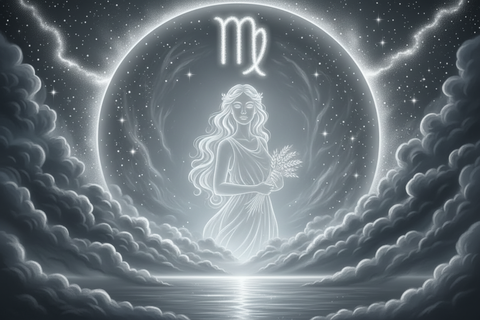
Je výborný deň na začiatok nejakej akcie. Zvýši sa vaša kreativita a originalita, čo vzbudí zaslúžený obdiv. Dokonca sa vám môže podariť uhádnuť tajné prianie partnera.

Môžete očakávať priaznivý zhluk nečakaných okolností a šťastných náhod. Patria vám sympatie okolia a budete môcť doriešiť komplikované pracovné záležitosti.
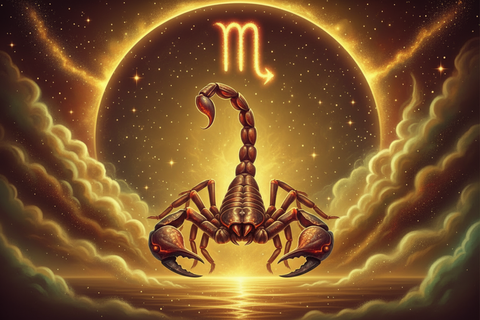
Planéty signalizujú ohrozenie jedného priateľstva. Ide o osobu rovnakého pohlavia. Porozmýšľajte, či ste niekde neurobili chybu. V láske máte zelenú.

Buďte trpezliví a neusilujte sa privodiť zmenu násilím. Božie mlyny melú pomaly, ale presne. Bola by škoda, keby ste sa pred cieľom vzdali svojich ideálov. Máte ešte čas.

Znovu uskutočníte jeden z vašich plánov. Počítajte s reakciou závistlivcov a konkurencie. Prekvapením bude priaznivá správa z blízkeho okolia.

Správajte sa prístupnejšie. Inak sa môže stať, že sa v istej veci nedostanete dopredu. Môžete očakávať menší obnos peňazí, ktorý ste už považovali za stratený.

Úlohy zvládnete bez problémov, komplikácie sa môžu objaviť vo vzťahu k partnerovi. Zamyslite sa nad jeho problémami a trochu sa pocvičte aj v tolerantnosti.
 Digestion and Detox
Up to 80% of new cells are located in the intestines. Are you surprised by this information? The intestines and the balance of microbiota play a fundamental role in the proper functioning of the immune system. A specific and balanced microbiome supports immunity, preventing harmful substances from entering blood cells and teaching immune protection.
 Digestion and Detox
“It’s just another vitamin… or is it?” is probably what each of us thinks, but the more we learn about pantothenic acid, the more fascinated we become. Vitamin B5 plays a key role in converting food into energy; it supports concentration, mental well-being and even skin regeneration. Without it, the body would be unable to produce hormones properly or cope with stress. It is also a substance found in every cell of our body; it has been with us since birth and contributes to energy levels, skin health and mental alertness. Although we may overlook it, its importance is undeniable and its name is no coincidence. It derives from the Greek word ‘panto’, meaning ‘everywhere’. And indeed, it is ubiquitous, irreplaceable and somewhat mysterious. If we start looking into where this essential vitamin is found, we’ll find it in eggs, nuts, wholegrains, shellfish, avocado, salmon, liver, kidneys, beef, yeast and vegetables… And if we’ve just realised that our diet is lacking in these foods, we should consider taking a B5 supplement. Within just a few days, we’d start to notice a difference. We’d wake up with more energy, our minds would be clearer, and we’d even see an improvement in our skin. Our colleagues wouldn’t fail to notice that we’re working faster, are more creative and less stressed. Pantothenic acid will help us get back into shape. And for us, it will no longer be just another substance on the list of vitamins.
Digestion and Detox
“It’s just another vitamin… or is it?” is probably what each of us thinks, but the more we learn about pantothenic acid, the more fascinated we become. Vitamin B5 plays a key role in converting food into energy; it supports concentration, mental well-being and even skin regeneration. Without it, the body would be unable to produce hormones properly or cope with stress. It is also a substance found in every cell of our body; it has been with us since birth and contributes to energy levels, skin health and mental alertness. Although we may overlook it, its importance is undeniable and its name is no coincidence. It derives from the Greek word ‘panto’, meaning ‘everywhere’. And indeed, it is ubiquitous, irreplaceable and somewhat mysterious. If we start looking into where this essential vitamin is found, we’ll find it in eggs, nuts, wholegrains, shellfish, avocado, salmon, liver, kidneys, beef, yeast and vegetables… And if we’ve just realised that our diet is lacking in these foods, we should consider taking a B5 supplement. Within just a few days, we’d start to notice a difference. We’d wake up with more energy, our minds would be clearer, and we’d even see an improvement in our skin. Our colleagues wouldn’t fail to notice that we’re working faster, are more creative and less stressed. Pantothenic acid will help us get back into shape. And for us, it will no longer be just another substance on the list of vitamins.
 Digestion and Detox
Excessive hair loss, slowed hair growth or premature greying can have various causes, with diet playing a key role. Para-aminobenzoic acid (PABA), also known as vitamin B10 (although it is not officially a vitamin), is one of the key nutrients that support the health of the hair, skin and the body’s overall vitality. Furthermore, it may also influence the ageing process. Despite its beneficial effects, it is less well known today, although in the past it was regarded as almost a miracle cure for maintaining youthfulness. In the 1950s, scientists investigated PABA for its potential in combating degenerative diseases and recorded cases where it had slowed down the greying of hair.
Digestion and Detox
Excessive hair loss, slowed hair growth or premature greying can have various causes, with diet playing a key role. Para-aminobenzoic acid (PABA), also known as vitamin B10 (although it is not officially a vitamin), is one of the key nutrients that support the health of the hair, skin and the body’s overall vitality. Furthermore, it may also influence the ageing process. Despite its beneficial effects, it is less well known today, although in the past it was regarded as almost a miracle cure for maintaining youthfulness. In the 1950s, scientists investigated PABA for its potential in combating degenerative diseases and recorded cases where it had slowed down the greying of hair.
 Immunity and Vitality
Histamine is often perceived negatively, especially for its role in allergic reactions and intolerance. As with many things in life, black-and-white thinking is not suitable for this biogenic amine. As a neurotransmitter, it participates in many critical processes. In defending the body, for example, it supports the enlargement of blood vessels, making it easier for immune cells to access the site of inflammation. At the same time, it stimulates the production of gastric juices (essential for food processing), regulates the sleep cycle, controls appetite, and plays a role in learning, memory, and emotions. Histamine naturally occurs in the human body, and its balance is crucial for health. In the digestive system, it's broken down by the enzyme diamine oxidase. However, if histamine intake is greater than the body can break down, histamine intolerance develops. This imbalance can be caused by stress, poor lifestyle, medicines, or other factors. Excess histamine can lead to unpleasant symptoms, often resembling food allergies or digestive issues. It's essential to understand histamine as an important helper in our body.
Immunity and Vitality
Apple cider vinegar is one of the most popular natural products with a wide range of health benefits. Apple cider vinegar has been sought after for centuries for its health effects, including promoting digestion, regulating weight, maintaining stable blood sugar levels, and improving cardiovascular health.
Immunity and Vitality
Apple cider vinegar is one of the most popular natural products with a wide range of health benefits. Apple cider vinegar has been sought after for centuries for its health effects, including promoting digestion, regulating weight, maintaining stable blood sugar levels, and improving cardiovascular health.
 Immunity and Vitality
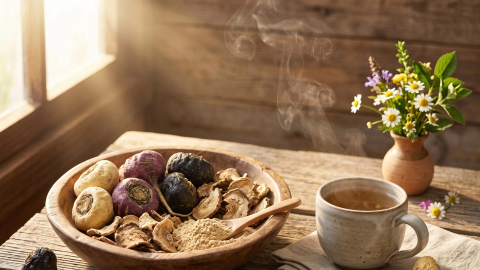
This remarkable plant (Lepidium mayenii) from the Peruvian Andes, where it is grown at extreme altitudes (4000 m a.s.l.). It is incredibly resilient and can survive and grow in conditions where most other plant species would not survive, such as low temperatures, strong winds, and intense UV radiation. Its ability to adapt to harsh environments enriches it with nutrients and substances that positively impact the human body, enhancing resistance to both physical and mental stress.
Immunity and Vitality
This remarkable plant (Lepidium mayenii) from the Peruvian Andes, where it is grown at extreme altitudes (4000 m a.s.l.). It is incredibly resilient and can survive and grow in conditions where most other plant species would not survive, such as low temperatures, strong winds, and intense UV radiation. Its ability to adapt to harsh environments enriches it with nutrients and substances that positively impact the human body, enhancing resistance to both physical and mental stress.
 Health
originates from the Latin word " Alchemilla " related to alchemy. Alchemists believed in the miraculous power of water droplets on its leaves "heavenly water," (symbolized purity and nature's mystery), which were supposed to help them achieve eternal youth or transform a common metal into gold. They paid great attention to lady's mantle, which led not only to its naming but mainly to the discovery of its medicinal effects. The present relies on proven health benefits this medicinal plant offers.
 Health
“Ashwa” (horse) “gandha” (root smell), the name itself hints at the plant's ability to grant strength and vitality (the strength of the animal hidden in the root). Known as “Indian ginseng” (similar shape), and “winter cherry root” (fruits resemble cherries). From the small shrub with yellow flowers, the root is mainly used in traditional medicine. Due to its calming effects, it's significantly known as the Sleep or Dream Berry. The Latin name somnifera also reveals its property ; invoking sleep.
Health
“Ashwa” (horse) “gandha” (root smell), the name itself hints at the plant's ability to grant strength and vitality (the strength of the animal hidden in the root). Known as “Indian ginseng” (similar shape), and “winter cherry root” (fruits resemble cherries). From the small shrub with yellow flowers, the root is mainly used in traditional medicine. Due to its calming effects, it's significantly known as the Sleep or Dream Berry. The Latin name somnifera also reveals its property ; invoking sleep.
 Health
Magnesium is an important mineral for the proper functioning of the body. The name magnesium comes from the Greek city of Magnesia, where this element was originally discovered in 1755. It is the 8th most abundant element on earth, making up approximately 2% of the earth's crust. It has a naturally sour taste, which is also evident in mineral waters. It is found in every cell of green plants (magnesium ions are present) and also in every cell of the human body. Our body needs magnesium for more than 300 biochemical processes,such as energy production and nucleic acid synthesis, maintaining proper heart rhythm and blood pressure. It would be difficult to find a process in the body that magnesium does not influence.
Health
Magnesium is an important mineral for the proper functioning of the body. The name magnesium comes from the Greek city of Magnesia, where this element was originally discovered in 1755. It is the 8th most abundant element on earth, making up approximately 2% of the earth's crust. It has a naturally sour taste, which is also evident in mineral waters. It is found in every cell of green plants (magnesium ions are present) and also in every cell of the human body. Our body needs magnesium for more than 300 biochemical processes,such as energy production and nucleic acid synthesis, maintaining proper heart rhythm and blood pressure. It would be difficult to find a process in the body that magnesium does not influence.
 Harmony
This natural supplement contains a lesser-known plant called wild yam (Discorea villosa) from the Dioscoreaceae family. Let's get to know it ☺ There are more than 600 species of yam plants, the most prominent being wild yam (Dioscorea villosa). This hardy liana (vine) of equatorial regions has heart-shaped leaves. The leaves and roots contain diosgenin (the primary component), and it is the root that is used in medicine and in our supplements as a concentrated extract (highest yield), with a structure similar to cholesterol. This substance was used to produce the first contraceptive bases.
 Harmony
Choline and Inositol - two words you probably haven't heard before. In terms of supplements, however, these are important B-group nutritional supplements, which are actually vitamins. These substances are very similar to vitamins and support liver function and lipid metabolism, i.e. fat metabolism. Choline is a water-soluble vitamin. It is found in lecithin, which is common in many plant and animal tissues. Choline is a precursor to the neurotransmitter (i.e. transmitter) acetylcholine, which is involved in many memory and muscle functions.
Harmony
Choline and Inositol - two words you probably haven't heard before. In terms of supplements, however, these are important B-group nutritional supplements, which are actually vitamins. These substances are very similar to vitamins and support liver function and lipid metabolism, i.e. fat metabolism. Choline is a water-soluble vitamin. It is found in lecithin, which is common in many plant and animal tissues. Choline is a precursor to the neurotransmitter (i.e. transmitter) acetylcholine, which is involved in many memory and muscle functions.
 Harmony
Sometimes it seems at first glance that we have everything under control, but the reality is often different. "Liters" of coffee, fast food between duties, endless deadlines, constantly ringing phones. The result is fatigue, problems with concentration, forgetting even simple things, moods changing faster than the weather, and nights full of tossing and turning, as if our mind is running at a minimum. In a hectic pace, we do not realize the importance of proper nutrition. The good news is that nature can save us, in nature everything can be in harmony if we combine it from nature, it is a mysterious duo of choline and inositol.It is an ideal combination not only for the body but also for a tired mind, which is calling for help. Although many are unaware of them, choline and inositol work in every cell of our body, keeping our brain in shape, liver clean, and nerves strong. Their effects were discovered relatively recently. Why should we pay attention to these nutrients?
Harmony
Sometimes it seems at first glance that we have everything under control, but the reality is often different. "Liters" of coffee, fast food between duties, endless deadlines, constantly ringing phones. The result is fatigue, problems with concentration, forgetting even simple things, moods changing faster than the weather, and nights full of tossing and turning, as if our mind is running at a minimum. In a hectic pace, we do not realize the importance of proper nutrition. The good news is that nature can save us, in nature everything can be in harmony if we combine it from nature, it is a mysterious duo of choline and inositol.It is an ideal combination not only for the body but also for a tired mind, which is calling for help. Although many are unaware of them, choline and inositol work in every cell of our body, keeping our brain in shape, liver clean, and nerves strong. Their effects were discovered relatively recently. Why should we pay attention to these nutrients?
 Beauty and Skin
Why + C + hyaluronic acid? In short, it is an elixir of youth, characterised by three powerful antioxidants. The combination of these ingredients increases health benefits, and not just for the skin (as it may seem). Even in youth, the amount of hyaluronic acid increases. This trio helps to safely replenish and improve the health of the skin on the face, bones, joints and veins, making them firm and strong. Vitamin C is necessary for biosynthesis (and conversion) and effective utilisation. Let's break it down into small pieces, because here too, everything is literally connected...
 Beauty and Skin
Designed specifically for stronger antioxidant effects, better absorption and utilisation, with rosehip as the main source of natural vitamin C. Vitamin C, known as ascorbic acid, is a nutrient essential for the functioning of our body. Our body synthesises this essential vitamin, so it is necessary to obtain it from fruits and vegetables such as citrus fruits, peppers, horseradish, and tomatoes.
Beauty and Skin
Designed specifically for stronger antioxidant effects, better absorption and utilisation, with rosehip as the main source of natural vitamin C. Vitamin C, known as ascorbic acid, is a nutrient essential for the functioning of our body. Our body synthesises this essential vitamin, so it is necessary to obtain it from fruits and vegetables such as citrus fruits, peppers, horseradish, and tomatoes.
 Beauty and Skin
Collagen is essentially a protein that the human body can produce itself, as it is essential for the proper functioning of cartilage, glands, joints, bones, muscles and skin. It is the most abundant substance in our body (up to 3%). Unless you are on social media, you really need to depend on it until you suddenly start to feel pain in your tendons, knees, ligaments... If you have a proper, balanced diet and get enough exercise, your body will produce very little of it. But...
Beauty and Skin
Collagen is essentially a protein that the human body can produce itself, as it is essential for the proper functioning of cartilage, glands, joints, bones, muscles and skin. It is the most abundant substance in our body (up to 3%). Unless you are on social media, you really need to depend on it until you suddenly start to feel pain in your tendons, knees, ligaments... If you have a proper, balanced diet and get enough exercise, your body will produce very little of it. But...
 Energy
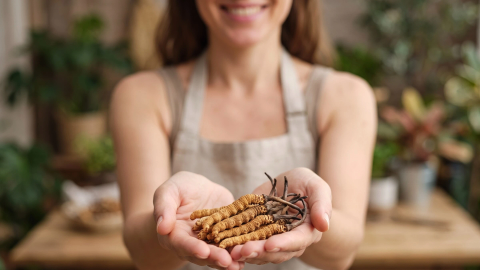
Have you heard about this fascinating fungus with its peculiar appearance and way of existence? The names „Chinese caterpillar, Himalayan gold or mushroom of longevity“ do not reveal much ...
 Energy
In today's world, where we are subject to daily stress, it is increasingly important to supply the body with the power of nature. Male Vitality is a supplement made from the most effective plants. A unique formula tailored to the needs of modern men and their active lifestyles. For more energy and increased performance at work and elsewhere, so that you can fully enjoy all the adventures that await you.
Energy
In today's world, where we are subject to daily stress, it is increasingly important to supply the body with the power of nature. Male Vitality is a supplement made from the most effective plants. A unique formula tailored to the needs of modern men and their active lifestyles. For more energy and increased performance at work and elsewhere, so that you can fully enjoy all the adventures that await you.
 Energy
Cordyceps sinensis – this is our zombie predator. In China, they call it "winter insect, summer herb". Imagine a fungus that shoots out its spores (seeds) during reproduction in summer, which then attach themselves to the body of an insect. It gradually overgrows the insect's body and parasitises it, literally eating it from the inside, while the insect continues to live, changing its external appearance but continuing to hunt for food until it burrows underground, where it dies and mummifies. The fungus can survive in it for a long time. The fungus literally takes over the host's body, growing out of it in the summer and forming slender "sticks" 5-20 cm high. This inspired the Last of Us video game series, where the Cordyceps fungus turns humans into zombies. In real life, this video game takes place in the real life of insects. The victims are butterfly larvae, large ants, spiders...
Energy
Cordyceps sinensis – this is our zombie predator. In China, they call it "winter insect, summer herb". Imagine a fungus that shoots out its spores (seeds) during reproduction in summer, which then attach themselves to the body of an insect. It gradually overgrows the insect's body and parasitises it, literally eating it from the inside, while the insect continues to live, changing its external appearance but continuing to hunt for food until it burrows underground, where it dies and mummifies. The fungus can survive in it for a long time. The fungus literally takes over the host's body, growing out of it in the summer and forming slender "sticks" 5-20 cm high. This inspired the Last of Us video game series, where the Cordyceps fungus turns humans into zombies. In real life, this video game takes place in the real life of insects. The victims are butterfly larvae, large ants, spiders...
 Vision and Cognitive Functions
Our eyes are our main source of information; we receive up to 80 per cent of our sensory input through them. Our sight helps us find our bearings, perceive our surroundings, ourselves and others, and we take this for granted... but nowadays we spend most of the day in front of screens (computers, TVs and mobiles), and our eyes are under a great deal of strain. Tired and dry eyes, blurred vision and deteriorating eyesight are becoming common problems. Ageing, oxidative stress and a lack of nutrients can contribute to vision problems, such as age-related macular degeneration or eye strain, even in young people. If you want to give your eyes the very best, put your trust in the power of nature. The Dr Lucullus dietary supplement – Vision Support – is the perfect combination of herbs and vitamins that protect, regenerate and strengthen your eyesight with the help of antioxidants. Discover the power of nature for your eyes.
 Vision and Cognitive Functions
Imagine having to run a marathon every single day without a single day off. Your muscles would probably start to protest very quickly, wouldn’t they? It is precisely this same extreme feat, albeit on a much smaller scale, that we demand of our eyes.
Vision and Cognitive Functions
Imagine having to run a marathon every single day without a single day off. Your muscles would probably start to protest very quickly, wouldn’t they? It is precisely this same extreme feat, albeit on a much smaller scale, that we demand of our eyes.
 Vision and Cognitive Functions
Imagine an ordinary summer garden. What do you see? Perhaps some roses, a few shrubs, green grass and… bright orange or yellow flowers that look like little suns caught in a frame. That is precisely what the common marigold (Calendula officinalis) is. For many people, it is simply a pretty addition to flowerbeds, but in fact it is one of the most powerful and versatile herbs that nature has to offer.
Vision and Cognitive Functions
Imagine an ordinary summer garden. What do you see? Perhaps some roses, a few shrubs, green grass and… bright orange or yellow flowers that look like little suns caught in a frame. That is precisely what the common marigold (Calendula officinalis) is. For many people, it is simply a pretty addition to flowerbeds, but in fact it is one of the most powerful and versatile herbs that nature has to offer.
 Joints and Movement
Explore the contents of this health-promoting mixture and how it works. It ensures better mobility, which is (by far) not all. Joint Pro improves a whole range of health specifications, including inflammation, pain, stress resistance and antioxidant capacity. Dr. Lucullus joint nutrition is designed for prevention and especially for athletes (reduces weakness, strain), seniors (addresses limited mobility - arthritis and arthrosis), people after injuries (rapid regeneration), overweight people (strengthens joint resistance), young people (relief from stiffness, support for development).
 Joints and Movement
Imagine waking up every morning with an unpleasant feeling of pressure in your knees, back or fingers. For millions of people, stiff joints and chronic musculoskeletal pain are a daily reality. Whilst most people reach for painkillers, which merely mask the symptoms and upset the stomach, modern science is increasingly highlighting a natural alternative.
Joints and Movement
Imagine waking up every morning with an unpleasant feeling of pressure in your knees, back or fingers. For millions of people, stiff joints and chronic musculoskeletal pain are a daily reality. Whilst most people reach for painkillers, which merely mask the symptoms and upset the stomach, modern science is increasingly highlighting a natural alternative.
 Joints and Movement
Aromatic, spicy and unmistakable. When a cold is coming on, most of us automatically reach for a cup of hot tea with fresh ginger, honey and lemon. But did you know that this knobbly underground stem gem harbours properties that go far beyond treating a cold?
Joints and Movement
Aromatic, spicy and unmistakable. When a cold is coming on, most of us automatically reach for a cup of hot tea with fresh ginger, honey and lemon. But did you know that this knobbly underground stem gem harbours properties that go far beyond treating a cold?
We will send you the best offers with the most advantageous prices and discounts, current news for your health.