















Every winter the same thing happens, as it has for centuries, until one wonders why medical science hasn’t managed to develop a 100% effective cure for a simple ‘little cold’. First you feel tired, by evening you’ve got chills, and by morning you know you simply won’t make it through the day and will have to stay in bed again to get over this unpleasant condition. Well, yes. Stay in bed. If that were all, we’d manage to get through it somehow. But how, when you can’t catch your breath, your airways are blocked and, above all, there’s that unpleasant, exhausting cough…

Of course, these days all you have to do is pop into a chemist’s, and the endless array of different syrups and throat sprays really does help. But do they make you feel queasy too? Do you only take them because the alternative – that cough – is even worse? How about remembering how your grandmother used to cure you ages ago with a simple herbal tea? No chemist’s needed. No upset stomach. What herbs did she use?
Even in today’s high-tech world, with the pharmaceutical industry at its peak, there is still a second option: ordinary plants straight from nature. Carefully gathered, dried and prepared to help. Ordinary plants from ordinary nature. Without any side effects. What on earth did that old granny actually have?
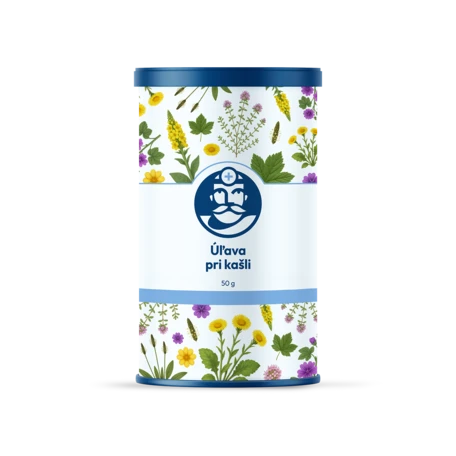
Mullein flowers. These help to clear the airways in cases of a dry, persistent cough. They are also very effective for bronchitis, laryngitis and asthma. In the past, they were even used to treat tuberculosis. They help loosen phlegm and clear the airways thanks to the mucilaginous substances contained in the flowers.
Thyme is probably the best-known ingredient. We used to pick it often as children. It contains essential oils, linalool, serpylene, tannins… It helps to clear the throat in cases of upper respiratory tract catarrh. It is excellent for pneumonia. It calms the nervous system and soothes a dry, spasmodic cough (whooping cough). Moorish mallow is another active ingredient in today’s tea blend and helps to break down phlegm. It is often used in mouthwashes and gargles. It helps with inflammation of the stomach lining.

‘Here lay the vicar.’ Tusilago farfara. That’s how our primary school teachers used to help us remember the Latin name for coltsfoot. So that we wouldn’t forget the little plant that always helps with children’s most common ailments. It contains mucilages, phytosterols, tannins, hurcins, tusilagin, vitamin C and a host of other substances that can significantly help in the fight against flu or the common cold. It was used as a compress for eye infections. Be careful with long-term use, however – it also contains alkaloids, which can have a negative effect on the liver if used frequently!
Lance-leaved plantain is a source of vitamins A, C and K. It contains acids, tannins, beta-carotene, invertin and calcium. It has mucolytic, anti-inflammatory, antibacterial and secretolytic effects. It helps to loosen phlegm and soothes the irritation that triggers a cough. And finally, blackcurrant leaf. It strengthens the immune system and boosts resistance to infections, viruses and bacteria. It is effective against flu and colds, and protects against pneumonia.
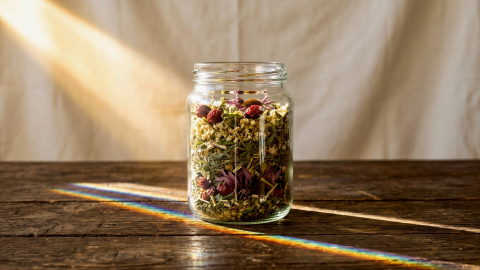
These six ordinary herbs can work wonders. A tea made from their dried leaves in just the right proportions can make those moments more pleasant when there’s nothing else to do but lie there patiently, whilst your body, strengthened by this natural remedy, fights off the illness. And it has always proved effective. Try helping your body with a cup of tea from nature.