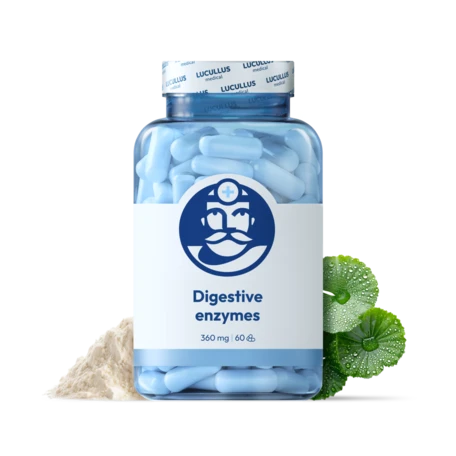
















Do you suffer from an upset stomach, bloating or irregular digestion? At the chemist’s, you’ll probably be recommended one of the two most popular supplements: probiotics or digestive enzymes.

The boxes often look similar, sitting side by side on the shelf, and both promise the same result: a calm tummy. However, they play completely different roles in our bodies. Whilst some physically break down food into tiny components, others look after the overall health and ecosystem of your gut.
If you want to tackle your problem effectively, it is essential to understand when to take digestive enzymes and when to take probiotics.
Digestive enzymes
Our bodies naturally produce digestive enzymes. They are found in saliva, the stomach, the pancreas and the small intestine. They act like microscopic scissors. Their sole purpose is to take a large piece of food that you eat and ‘cut’ it into such small pieces (amino acids, fatty acids, simple sugars) that they can pass through the intestinal wall directly into the bloodstream.
Each enzyme is specialised in breaking down specific components:
Amylase breaks down carbohydrates (sugars).
Protease can break down complex proteins (such as those found in meat).
Lipase breaks down fats.
Lactase breaks down milk sugar (which is why people with lactose intolerance look for it).
Enzymes are a first-line remedy if you know you’re in for a heavy lunch, or if your body has stopped producing enough of its own enzymes (for example, due to stress or ageing). If you feel extremely full, bloated or tired within 30 to 60 minutes after a meal, it is precisely these ‘scissors’ that you are lacking. As undigested food ferments in the gut, this leads to gas and cramps. Taking an enzyme supplement just before your first mouthful prevents this fermentation.
Probiotics
Unlike inactive enzymes, probiotics are living organisms – beneficial strains of bacteria (most commonly of the genera Lactobacillus and Bifidobacterium) that naturally colonise our digestive tract. Rather than breaking down your Sunday lunch, they look after the overall ecosystem.
In your large intestine, they are constantly battling ‘bad’ (pathogenic) bacteria. When there are more of the good ones, everything runs like clockwork. Probiotics strengthen the intestinal walls, produce important vitamins (such as vitamin K and B vitamins) and are in constant communication with our immune system.
Probiotics will not relieve an upset stomach immediately after overeating. However, they are absolutely indispensable if you suffer from long-term digestive problems (alternating between diarrhoea and constipation), have a weakened immune system, or have recently recovered from an infection. They are absolutely essential during and after a course of antibiotics, which destroy both bad and good bacteria in the gut at the same time. To be effective, you must take them regularly over the long term.

A simple example to help you understand
Imagine your digestive system as a huge processing plant.
Digestive enzymes are the workers right on the production line. When the material (your food) arrives, they immediately set to work on it, break it down into its components and send it on. If there aren’t enough workers, the material builds up, goes off, and the whole line grinds to a halt (bloating and pain).
Probiotics are maintenance staff, security guards and gardeners all rolled into one. They do not work directly with the incoming material on the production line. However, they ensure that the factory remains clean, that pests do not run about, that toxic waste does not accumulate, and that the factory walls do not start to go mouldy.
If you’re looking for immediate relief from food intolerances or after eating certain foods that are harder to digest, digestive enzymes are your best bet. However, if you need to give your digestive system a complete reset, boost your immunity and get rid of chronic bowel problems, invest in high-quality probiotics. And for perfect balance? Many people with sensitive digestion combine both – probiotics in the morning for long-term health and enzymes specifically before heavy meals.