















“Calcium on its own isn’t enough; it can even be harmful to your health.” What sort of conspiracy theory is this, you might think... After all, we need calcium for our bones, our teeth… but if we were to read the specialist literature, we’d find out… yes, calcium is important, but only if it knows where it’s supposed to be. Because when it wanders around the body unchecked, it can ‘park’ itself in the arteries, kidneys or joints. Calcium in the arteries contributes to their hardening (calcification), thereby increasing the risk of a heart attack, stroke or high blood pressure. This is where vitamin K2 comes to the rescue. It activates a protein called Matrix GLA protein, which ‘cleans’ the blood vessels by preventing calcium from being deposited in their walls. At the same time, it activates osteocalcin, which ensures that calcium goes where it is needed. This is precisely why vitamin K2 is essential – it acts as a GPS for calcium. With its special ability to regulate calcium transport – and not just any old way – it literally acts as a navigator for calcium, ensuring it doesn’t end up where it doesn’t belong (in the arteries), but is directed to where it’s needed: in the bones and teeth. The most effective form of vitamin K2 is MK-7 (menaquinone); although it sounds like a supporting character, it is a systems operator (the sort who doesn’t take the stage at meetings, but without whom the whole company would collapse). Scientists aren’t exactly the sort to follow trends; they don’t always agree, but in the case of vitamin K2, also known as MK-7, they report that this vitamin has many benefits:

A Dutch study has found that a higher intake of vitamin K2 is associated with a lower risk of cardiovascular disease. How does this work? Quite simply, K2 activates the MGP protein, which prevents calcium from being deposited in the arteries. A Japanese study has shown that MK-7 supplementation improves bone density in post-menopausal women. It’s as if K2 were a trainer for your bones, giving them a solid foundation. And the latest research suggests that K2 may also have an impact on dental health, insulin sensitivity and even brain function.According to another study, K2 reduces arterial calcification even in people with chronic kidney disease, who have significant problems with calcium deposition. Suddenly, it seems that K2 is a real all-rounder. And, much like the James Bond of vitamins, it has a longer half-life in the body – up to 72 hours – which means it has plenty of time to fulfil its mission (it even has time for a coffee). A 2024 study demonstrated that K2 reduces night-time muscle cramps in older people.Clinical studies demonstrate its significant role in maintaining healthy arterial elasticity; it also reduces the risk of fractures, has been shown to promote faster bone healing following fractures, and has had a positive effect on neurological conditions (such as symptoms of anxiety and depression). All forms of vitamin K are necessary for proper blood clotting, whilst vitamin K2 (note: not K1!) is also essential for building and maintaining strong bones and flexible arteries. Vitamin K helps regulate oestrogen and can help reduce the severity of menstruation. (The name is derived from ‘Koagulation’; its discovery is mainly associated with blood clotting, and it is found throughout the body, including the liver, brain, heart, pancreas and bones).

And where can we find K2? This is where it gets interesting. Vitamin K2 (MK-7) is not found in peppers, broccoli or apples. Unlike vitamin K1, which is found in spinach or cabbage, K2 is mainly present in fermented foods. It’s mainly natto, which is fermented soya beans (slimy and stringy in texture, with an unappealing smell reminiscent of ammonia, but nutritionally it’s pure gold). Fermented cheeses – the smellier, the better. It’s an evolutionary need that we forgot when we stopped fermenting and started pasteurising everything.
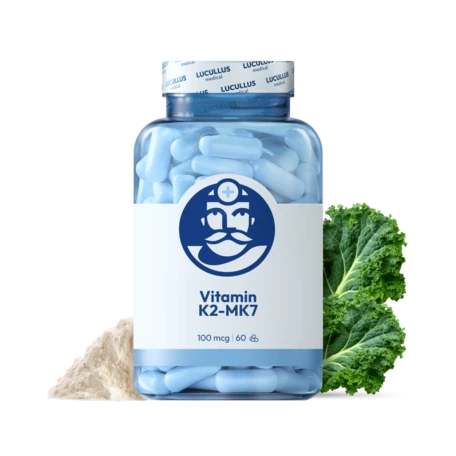
And if the thought of fermented foods gives you nightmares, don’t worry – there are also dietary supplements that contain MK-7 in a pure, effective and natural form: VITAMIN K2 – Dr Lucullus. Whilst other vitamins make a lot of noise, this one quietly protects the heart, strengthens bones (preventing osteoporosis) and ensures healthy teeth (preventing tooth decay and weakened enamel). Give this vitamin a chance – it may be overshadowed by other vitamins, yet it is essential, multifunctional and powerful.