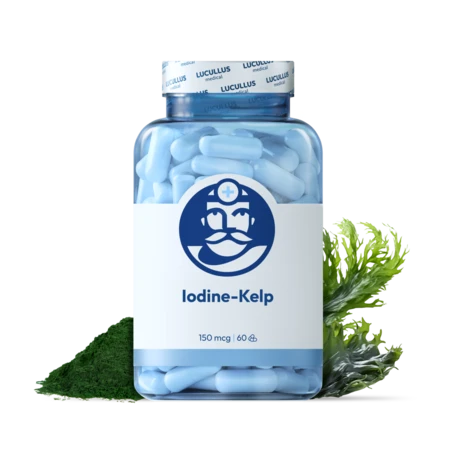
















Iodine is a trace element, with an interesting role in health, which we associate with the thyroid gland. It occurs naturally in the marine environment and one of the richest natural sources of iodine is kelp seaweed, also known as "Bladderwrack, Norwegian Laminaria," which has been used in traditional medicine and cuisine for centuries. Kelp can absorb large amounts of iodine directly from the ocean. The body needs iodine to produce thyroid hormones, without which much more would not work ... our metabolism would not function properly, we would have little energy, and our minds would be dull.

The story of iodine begins in 1811, when it was discovered by chemist Bernard Courtois, who was working on producing gunpowder. While cleaning ash from seaweed, he noticed that when it reacted with sulfuric acid, purple fumes were released, and so a new chemical element was born - iodine! (from the word ioeides = purple). Its significance for health was revealed when doctors noticed that people living by the sea who consumed seaweed and fish did not have thyroid problems. This knowledge led to the decision (in the 20th century) to add iodine to table salt, which almost eliminated the problem of thyroid disorders (enlarged thyroid) and the incidence of mental disabilities. Interestingly, in the 19th century, iodine was considered a luxury and was more expensive than gold. Gradually it became more accessible, and iodine solution in alcohol was a staple of every first aid kit. Stable iodine (potassium iodide) was used as a preventive measure against radioactive iodine, and iodine tablets served as rescue measures during nuclear disasters (Chernobyl, Fukushima).
How does Iodine - Kelp benefit our health?
By supporting the thyroid gland. Kelp is rich in iodine, which plays an important role in preventing (hypothyroidism) reduced thyroid function, which can lead to fatigue, weight gain, or concentration problems. Optimal thyroid function is essential for a healthy metabolism, as iodine supports the production of its hormones thyroxine and triiodothyronine. These hormones not only regulate metabolism but also affect body temperature and energy balance. It significantly improves brain function - iodine deficiency during pregnancy and childhood can cause delayed brain development. Children of mothers with adequate iodine intake have been shown to have higher IQ and better learning ability. Iodine from Kelp helps the body detoxify, removing heavy metals and toxins, such as mercury and lead. Many natural detoxification programs include consuming Kelp precisely for its ability to bind toxins. Adequate iodine intake ensures cell regeneration, contributing to better skin appearance and reducing hair loss and nail breakage. It strengthens the immune system - in addition to iodine, Kelp also contains antioxidants, vitamins (A, C, E, K and B), and minerals (calcium, magnesium, potassium, iron, and zinc), which protect cells from damage and support the body's defense mechanisms. It also contains a mineral called vanadium, which can help people with diabetes.

It helps support cardiovascular health and (through alginates) reduce fat absorption in the intestines. Researchers have also studied fucoxanthin, a substance effective in weight loss and significantly aids in weight management. It even keeps bones strong with the help of vitamin K and fucoidan. Kelp is moderately rich in iron, which is necessary to prevent iron deficiency (anemia). It has a high content of antioxidants, including carotenoids and flavonoids, which help fight free radicals causing disease and stress. Lastly, study results suggest that this seaweed may help slow the spread of many forms of cancer , including colon, breast, lung, and prostate cancer. Lower iodine intake can manifest as fatigue, weight gain, or poor concentration. The natural way is iodine from Kelp seaweed 𝒟𝓇. 𝐿𝓊𝒸𝓊𝓁𝓁𝓊𝓈 indispensable for the proper functioning of the body. Its regular consumption can help prevent thyroid problems, improve cognitive abilities, and strengthen immunity. The story of iodine discovery and utilization shows the importance of the connection between science and traditional knowledge.