












Imagine that your body is a factory working at full capacity (to provide energy, growth, cell repair) and iron is the fuel that keeps it running. If iron reserves are depleted, you may experience weakness, heart palpitations or paler skin. Symptoms of iron deficiency include brittle nails, dry hair, shortness of breath, sleep problems, reduced concentration, cold extremities, increased frequency of infections, and anaemia (a lack of red blood cells caused by too little iron in the body), which manifests itself as extreme fatigue. With anaemia, the body is not supplied with enough oxygen and quickly becomes exhausted. Bruising can also be a sign of iron deficiency, as this mineral is important in the formation of haemoglobin, which supports the proper functioning of blood platelets.

Iron is more than just a mineral; it is a key component of haemoglobin, a protein in red blood cells that also supplies oxygen to all cells in the body. Without it, our muscles would not function, our brain would work more slowly, and our immunity would fall under the pressure of bacteria and viruses. Iron also plays a role in growth, neurological development, cell function, and hormone synthesis.It supports the system, regulates body temperature and energy metabolism. There are two types of iron in our diet: haem and non-haem. The first, found in meat and seafood, is easier for the body to digest. Non-haem iron comes from plants such as beans, nuts and spinach, requires a little more effort, is equally important, but its absorption is lower. Vitamin C improves the absorption of non-haem iron. The amount of iron absorbed depends on the body's iron stores: the less iron the body has, the better its absorption.
Why do we need iron?
Energy for every day, helps prevent fatigue and promotes overall vitality. Strong muscles and mind, ensures proper oxygen supply for brain and muscle performance. Immunity protector, protects the body from infections and promotes wound healing. Better sleep, low iron levels can cause restless sleep and difficulty falling asleep. Iron often remains an unsung hero, and we only realise its importance when we are deficient in it. Without sufficient iron intake, our body loses its ability to use energy efficiently, as it is essential for transporting oxygen to the muscles and brain, which has a fundamental impact on physical and mental performance. If iron levels drop, you may experience poor concentration, irritability or fatigue, or internal blood clotting processes may be disrupted, resulting in increased bruising and bruising. Iron is doubly important for pregnant women, as a deficiency increases the risk of infection. Athletes may experience a decline in performance and weakened immunity, as low haemoglobin levels significantly limit oxygen transport to the muscles. Iron is a key player in our daily vitality and health. Iron deficiency is mainly the result of reduced iron intake in the diet, especially among vegetarians. Increased iron requirements in pregnant women, adolescents, blood donors and people with blood loss, e.g. during menstruation or surgery.
When should you increase your iron intake? Pregnant women, women with heavy periods, children, vegetarians, or people recovering from injuries or operations need more iron. Do not underestimate the importance of iron; it is your silent ally that will support you on difficult days. Start supplementing it today and give your body what it needs to perform at its best.

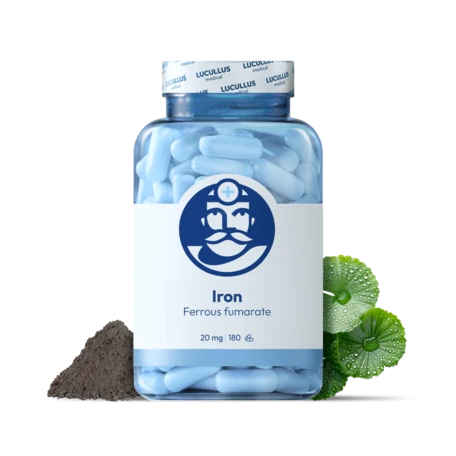
Dr. Lucullus recommends iron in the form of ferrous fumarate (ferrous salt of fumaric acid) as a "high-quality fuel" with 100% bioavailability and the highest content of elemental iron (more than sulphate and ferrous gluconate). It provides a safe form for a healthy lifestyle in an easily absorbable form of iron that does not interfere with your digestion. No digestive discomfort and no side effects. With sufficient iron intake (only 1 capsule per day, 20 mg), you will support your overall energy, endurance, concentration, immune system and mental performance.