















When we talk about plants that have shaped modern medicine, few have left such a significant mark as the wild yam (Dioscorea villosa). This climbing plant with a woody root did not become famous for its taste, but for its unique chemical profile. Its true value lies in the molecules that literally ushered in the era of modern endocrinology and synthetic hormones.

A breakthrough in medicine
Right up until the 1940s, the medical world faced a huge problem. Steroid hormones, such as progesterone or cortisone, were extremely important for the treatment of many conditions. However, obtaining them was incredibly expensive and inefficient, as they were mainly extracted from animal sources. Hormone therapy was therefore the preserve of the wealthy.
The breakthrough came thanks to the American chemist Russell Marker, who began researching the root of the wild yam.
The discovery of diosgenin: Marker found that the root of this plant contains an exceptionally high amount of a substance called diosgenin (a type of steroidal saponin). Marker developed a revolutionary laboratory process which enabled him to chemically ‘cut out’ the diosgenin molecule and convert it into pure, biologically identical human progesterone.
What impact did this process have? This discovery brought down the price of progesterone. Thanks to wild yam, the pharmaceutical industry was able to begin mass-producing, at low cost, not only the first hormonal contraceptive pills, but also corticosteroids for the treatment of severe inflammation, asthma and autoimmune diseases. Wild yam thus served as the cornerstone for medicines that continue to save and improve lives to this day.
Wild yam in modern dietary supplements
Nowadays, wild yam extracts are commonly sold in the form of tablets, tinctures, teas or transdermal (skin) creams. The marketing of these products often targets women, focusing in particular on their hormonal health, balance and fertility support.
The myth about progesterone
The most common misconception regarding dietary supplements is the claim that if you take a cream or capsule containing wild yam extract, your body will use it to produce progesterone. This is biologically impossible. Whilst in a laboratory we can convert diosgenin into progesterone through a complex chemical reaction at high temperatures and in the presence of specific catalysts, the human digestive tract and skin do not possess the enzymes required to carry out this conversion. Consuming yam therefore has no direct effect on your progesterone levels and will not increase them directly.

The actual pharmacological effects of supplements
However, this does not mean that wild yam supplements are useless. The active compounds in the plant (particularly diosgenin and the alkaloid dioscorin) have other, scientifically proven effects directly within the human body:
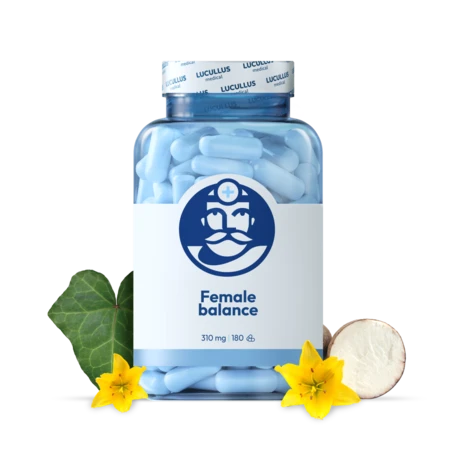
Phytoestrogenic activity: Although yam does not produce progesterone, diosgenin is able to bind gently to oestrogen receptors in the body, thereby helping to modulate hormonal fluctuations. This may provide relief from hot flushes and night sweats during the menopause. The ‘Women’s Balance’ dietary supplement from Dr LUCULLUS has been carefully developed to support women’s balance, focusing specifically on women’s comfort and balance.
Powerful antispasmodic effects: This is the main medicinal benefit of the plant itself, without any laboratory processing. Yam extracts are excellent at relaxing smooth muscle. Supplements are therefore extremely effective at relieving severe menstrual cramps, intestinal colic or muscle tension.
Reducing inflammation: Thanks to the anti-inflammatory properties of saponins, yam-based creams and compresses are still used today as a supportive treatment for rheumatoid arthritis and joint pain, so you can incorporate it into your joint care routine in the form of the Joint Pro Dr. LUCULLUS supplement.
The value of wild yam in medicine is incalculable, and without it, modern hormone therapy would probably look completely different and be considerably more expensive. Among today’s dietary supplements, it is an excellent natural remedy for relieving cramps and reducing inflammation. However, it is crucial to approach it with a scientific understanding and not to expect it to perform the miraculous task of producing hormones, which the body is unable to do.