















The clock hand points to two in the afternoon. An empty glass stands on the desk; the third cup of coffee is getting cold; and the muscle tension around the eyelid or calf begins to throb uncomfortably. My body is sending out signals of exhaustion, even though my fluid intake and consumption of stimulants look flawless on paper.

This scenario is not usually a failure of willpower or evidence of a lack of sleep. At the cellular level, a fundamental biochemical equation is at work, in which key variables are often missing.
What is cellular energy and how is it related to water?
Our bodies do not run on caffeine or sugar in their raw form. The only universal energy currency for every cell is adenosine triphosphate (ATP). This molecule is produced primarily in the cells’ ‘powerhouses’ – the mitochondria – by the breakdown of carbohydrates, fats and proteins from our diet.
The production and utilisation of ATP itself depend directly on two factors:
1. The availability of cofactors that drive biochemical reactions (B vitamins).
2. The cell’s hydrating and electrical environment, which maintains mineral ions (electrolytes).
The moment a cell finds itself without an adequate supply of minerals, energy production, the transmission of nerve impulses and the flow of nutrients across cell membranes are all disrupted.
The clean water paradox: Why litres of fluid can ‘dehydrate’ you
The standard advice when feeling low on energy is simple: drink more water. However, if we drink excessive amounts of demineralised, filtered or very soft water without an adequate intake of minerals, we encounter a fundamental physical phenomenon – osmosis.
A cell maintains a strictly regulated ratio of ions inside itself (intracellular) and in the space outside itself (extracellular). If we flood the bloodstream and the intercellular space with pure water containing no minerals, the concentration of electrolytes outside the cells will drop sharply.
In order to balance the osmotic pressure that has built up and prevent the blood from becoming too diluted, the body begins to excrete excess water via the kidneys. In the process, it also flushes out any remaining free minerals. The result is a paradox:
- the body is technically ‘overhydrated’, yet the cells are suffering from an ion deficiency
- water is not retained in the tissues and is excreted without having performed its function
- symptoms include a dry mouth, a dull headache and muscle soreness
Hydration does not simply mean the presence of water in the stomach, but its ability to pass through the cell membrane and remain there. Electrolytes are needed for this.
The key to cellular tension
Every cell in the body functions like a small battery. In order to absorb nutrients and transmit signals, it needs to maintain a resting membrane potential. This electrical charge is regulated by the so-called sodium-potassium pump, together with transport mechanisms for magnesium and calcium:
Sodium and Potassium: Sodium keeps water in the circulatory system and outside the cells, whilst potassium draws it directly into the cells. If there is an imbalance between them, the cell either loses volume or neuromuscular transmission is disrupted.
Magnesium: It is responsible for the relaxation of muscle fibres and is an essential cofactor in every reaction that utilises ATP (ATP exists within the cell primarily in a complex with magnesium as Mg-ATP). A deficiency immediately manifests as muscle twitches and a feeling of internal tension.
Calcium: Acts as the counterpart to magnesium – it is responsible for muscle contraction and the transmission of nerve impulses.
If any of these elements in the chain is missing, electrical communication is disrupted. The body feels ‘heavy’ and reflexes become irritable.
B vitamins
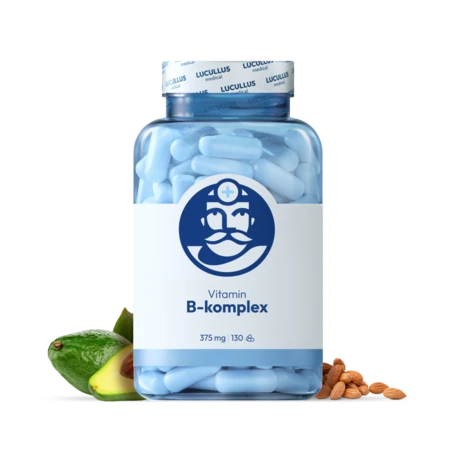
Even though our cells are optimally hydrated and supplied with minerals, we need a mechanism to convert the food we eat into the aforementioned ATP. This is where the B-complex vitamins come in.
These water-soluble substances act as key enzyme cofactors in the Krebs cycle and the respiratory chain:
B1 (thiamine), B2 (riboflavin) and B3 (niacin) help break down carbohydrates and fats into basic building blocks that can be utilised by the mitochondria.
B5 (pantothenic acid) is a component of coenzyme A, without which the synthesis of energy from fatty acids practically comes to a halt.
Vitamins B6, B9 (folate) and B12 support the production of red blood cells and the optimal transport of oxygen to the tissues, thereby helping to prevent hypoxic fatigue.
Caffeine in coffee does not provide cells with energy, but merely blocks adenosine receptors in the brain, thereby masking the true state of exhaustion. B vitamins, on the other hand, together with electrolytes, provide the means by which cells can actually generate and maintain their own fuel.

Promoting balance in everyday life
Optimising this system does not require drastic changes, but an understanding of the body’s mechanics:
Factor:
1. Fluid intake – a common mistake is drinking large amounts of plain (filtered) water all at once; a better alternative is to sip water regularly, supplemented with a pinch of mineral salt or electrolytes.
2. The afternoon slump – further caffeine puts unnecessary strain on the adrenal glands, so taking a B-complex supplement alongside a light meal and minerals is a better option.
3. Muscle signals – muscles signal through twitches, which we can quickly address by taking isolated magnesium; however, it is better to focus on a balanced ratio of potassium, sodium and magnesium in easily absorbable forms (citrates, malates, bisglycinates).
Cells operate according to precise physical and chemical laws. When concentration wanes in the afternoon and the muscles show signs of restlessness, the body often does not require further stimulation of the nervous system. It requires a return to the fundamental conditions of its biological stability – to a balance of water, mineral salts and enzymatic catalysts.