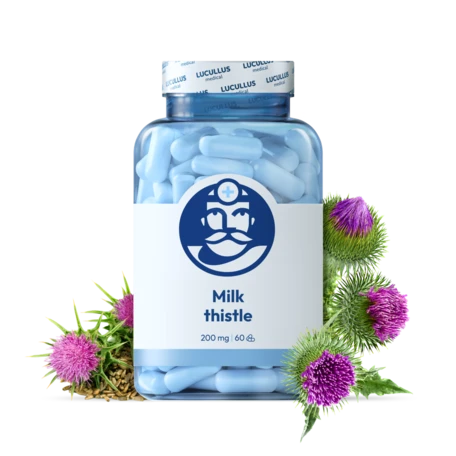









In nature, there are plants with a story to tell; one of them is the (sharp) milk thistle (Silybum marianum) – an unassuming thistle that harbours the power to protect the liver. The liver is a unique organ – the only one capable of regenerating itself. Yet it has its limits. Every day, it battles toxins, cleanses the blood, breaks down harmful substances and ensures a sufficient supply of energy. In today’s world, the liver suffers more than ever – an unhealthy diet, alcohol, stress and excessive use of medication all take their toll. And because the liver doesn’t hurt and doesn’t make itself heard, we often fail to notice that it is crying out for help. Milk thistle is a helper that gives the liver a chance to cope with the demands we place on it every day. That’s why it’s more than just a dietary supplement; milk thistle is a reminder that we must look after our bodies, even when we don’t yet feel any problems. When the liver suffers, the whole body suffers (from digestion right through to the immune system).
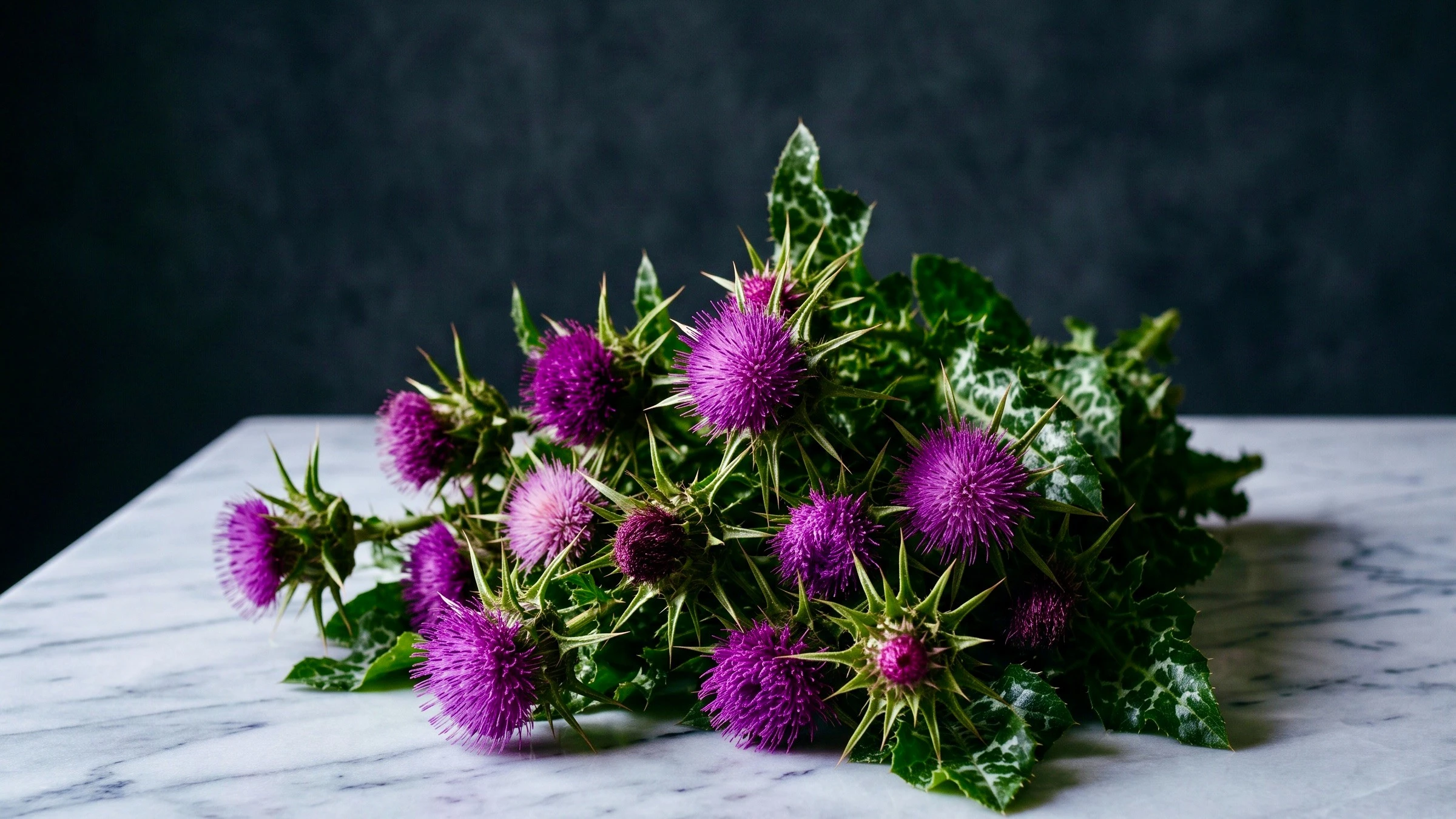
Milk thistle has been used as a ‘medicinal plant’ since ancient times, although its therapeutic uses have changed significantly over the centuries. In legends, it is associated with the Virgin Mary (the ‘blessed thistle’), which contributed to its use in monasteries. The ancient Greek physician Dioscorides mentions milk thistle in *De materia medica*, a five-volume encyclopaedia of medicinal plants which was used for over 1,500 years and formed the basis for subsequent herbals. It has traditionally been used to treat liver and gallbladder conditions, cancer, and to promote milk production. Thanks to intensive research, it has become one of the most extensively studied plants in modern phytotherapy. Imagine that milk thistle is also the most commonly cultivated medicinal plant in Slovakia. In the past, its leaves were used to make salad, the stems were cooked in a similar way to asparagus, and the seeds were roasted as a coffee substitute. Today we know that it is one of the few plants used to treat poisoning by the deadly green death cap (Amanita phalloides). Studies have shown its positive effects on neurodegenerative diseases, type 2 diabetes and cancer prevention. Its thistle-like leaves and hardiness make it a resilient plant that survives even in harsh conditions; older generations know it by the folk name ‘Christ’s Crown’. Some regard it as a weed, but in reality it is an exceptionally valuable herb. Its active ingredient is silymarin – literally a protective shield for the liver. A mixture of flavonolignans can block toxins from entering liver cells and reduce liver damage. It also protects liver and kidney cells from the toxic effects of medicines, including chemotherapy, whilst offering a broad spectrum of cardioprotective activity. It is important to note that they counteract the toxicity of antibiotics, metals and pesticides. They regenerate liver cells by promoting their renewal, thereby helping to repair damage caused by alcohol and an unhealthy diet. With its beneficial effects unequivocally demonstrated in numerous scientific studies, milk thistle appears to be a highly valuable phytopharmaceutical in the treatment of both acute and chronic liver damage, regardless of the cause. Milk thistle detoxifies the body and promotes excretion. It combats inflammation. Its anti-inflammatory and antioxidant properties mean that it is neuroprotective and helps prevent the decline in brain function that we experience as we age. It is often a useful supplement for people with acne. It protects against free radicals; its powerful antioxidant effects slow down ageing and protect cells from damage. Milk thistle supports digestion and fat metabolism, improves gallbladder function and helps with bloating or a feeling of heaviness. It has antimicrobial, anti-cancer, hepatoprotective, cardiovascular protective, neuroprotective, skin-beneficial and antidiabetic (among other) effects. In the case of viral infections (type C), in addition to its protective effect, it also promotes the excretion of viruses – which is explained by blocking their entry into cells and transmission – and reduces lung damage. It is a dietary supplement designed to improve health, not just for those with liver problems. It is a preventative measure that everyone who wants to live a longer and healthier life deserves.

Milk thistle is a plant for those who realise that good health cannot be taken for granted.
For those who want to look after their bodies before it’s too late.
And for those who believe that, even if we’ve messed things up, there’s still a way back.
If we look after our car, change the oil and take care of the engine, why shouldn’t we do the same for our bodies? The liver is our main filter; without it, we wouldn’t survive. Milk thistle 𝒟𝓇. 𝐿𝓊𝒸𝓊𝓁𝓁𝓊𝓈 is its best ally and protector, ... and it will reward you by making you feel lighter, full of energy and free from digestive problems.
If you want to treat your body to the very best, you don’t necessarily have to go on strict diets or give up life’s pleasures straight away; sometimes, all it takes is adding a ‘guardian’ to your life.