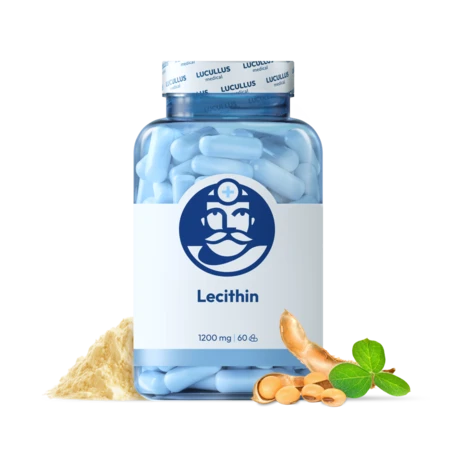
















Whilst browsing in a health food shop, my eye was caught by a supplement labelled ‘Lecithin’, with the text: ‘Soya lecithin – food for the brain, heart and liver’. I paused for a moment, because it reminded me: this is the secret ingredient my granny used to add to her breakfast, remarking with a smile, ‘It’s the secret to a good memory and a strong heart’ (she always used to say that). At the time, I just grinned and thought to myself. After all, grandmothers have secret recipes for everything from homemade ointments to teas that cure all ills (it’s a shame they don’t cure a broken heart). Even though it wasn’t yesterday, I know that my grandmother really did know the names of my classmates, even though I’ve forgotten where I’ve just put my keys. That’s exactly why I decided to find out whether it’s actually necessary, or just another one of those gadgets.

Lecithin, as I’ve discovered, isn’t just some supplement you see in adverts, but an essential component of every cell in our body. It forms the basis of cell membranes and ensures their flexibility and functionality. Essentially, it’s the architect of our cells. And where is it found? It’s in the brain, muscles and liver, for example – in short, everywhere where communication between cells is vital. So my grandmother wasn’t actually taking any ‘miracle cure’, but something her body naturally needed. I came across an interesting fact: lecithin is a rich source of phosphatidylcholine, which is converted in the body into acetylcholine (a neurotransmitter) responsible for memory and learning. ‘So if I’m deficient in acetylcholine, does that mean I’ll forget my email password, or why I opened the fridge?’ Essentially, yes. And that’s precisely why lecithin has been studied as a preventative measure against Alzheimer’s disease and other neurodegenerative disorders. It’s not exactly a pill that will instantly boost your IQ by 50, but taking it regularly will help keep your mind sharp and quick (just like my grandmother’s was). Research suggests that phosphatidylserine and phosphatidic acid from soya lecithin can improve memory, learning, cognitive abilities, concentration and even mood. “Right then,” I thought to myself, “the brain’s all well and good, but what about the heart?” And that’s when I came across another interesting fact. Lecithin dissolves fats and helps regulate cholesterol, thereby protecting blood vessels from blockages and atherosclerosis. “Aha! So, a bacon burger – is it enough just to wash it down with lecithin?” Not quite. Lecithin won’t undo the effects of an unhealthy diet, but it will help maintain the balance of fats in the body and lower bad LDL cholesterol. It acts as a natural emulsifier, breaking down fats into smaller particles so they’re more easily absorbed and don’t clog the blood vessels. Now it makes sense why my granny never had any problems with her blood pressure or heart. Another claim that caught my attention was that lecithin ‘cleanses the liver’. As I discovered, it’s not actually a matter of ‘cleansing’ (a popular phrase), but rather the regeneration and protection of liver cells; it can help prevent the build-up of fat in the liver. Lecithin helps break down fats in the liver, which may prevent non-alcoholic fatty liver disease (fatty liver), a condition that is often the result of an unhealthy lifestyle. This is achieved by the components choline, linoleic acid and inositol, which play an important role in fat metabolism and liver health. Although lecithin does not act as a ‘sponge’ for toxins, it does help and support the proper processing of fats in the liver. Furthermore, some studies suggest that it also aids digestion, as it acts as a natural fat-breaking agent, facilitating the absorption and digestion of fats, whilst also protecting the lining of the stomach and intestines. And once again it has been confirmed: my grandmother ate whatever she wanted, but never complained of feeling heavy after a meal. By helping to break down fats, lecithin supports their passage through the liver and gallbladder, thereby reducing the risk of gallstones.

When I got to the final point of the findings, I must admit I was sceptical. Could lecithin and stress really have anything in common? Well, as it turns out, phosphatidylserine, which is found in lecithin, helps regulate levels of cortisol, the stress hormone. Some studies suggest that it can alleviate both mental and physical stress and may even help with the symptoms of the menopause. And the bonus? Soya lecithin is non-hydrogenated and biodegradable. A pleasant surprise was that lecithin is also used in cosmetics to moisturise the skin. After checking the facts, I came to the conclusion that my grandmother was right and that lecithin really is beneficial not only for the brain and heart.
When all the pieces of the jigsaw are put together, we realise that lecithin is an essential nutrient that the body needs to function healthily. It supports brain function and memory, helps maintain healthy cholesterol levels and blood vessels, protects the liver and aids the digestion of fats, helps manage stress and moisturises the skin. Naturally, I didn’t hesitate and found a pack of Dr Lucullus Lecithin, which I immediately added to my basket. Because I’d love to be able to remember the names of my granddaughter’s classmates when I’m in my nineties, just like my grandmother did. If she were here, I’d definitely tell her that.