Do you know that moment when you turn a bottle of vitamins over, look at the back, and feel as though you need a PhD in biochemistry just to make sense of it? Clusters of letters, percentages running into the hundreds and a list of ingredients longer than a Sunday shopping list.

Dietary supplements are not medicines; the checks carried out before they are placed on the market are not usually as strict, so being able to read the label is your best defence against wasting your money. So let’s take a look at the basic abbreviations and pitfalls, explained in plain language. :-)
ODD, RVH and NRV. What do they actually mean?
In every nutritional table, you will find a column showing percentages and abbreviations. They all essentially mean the same thing:
1. RDA – Recommended Daily Allowance
- a traditional term that we come across most often. It indicates the amount of a nutrient that the average adult needs to consume each day to maintain optimal health
2. RVH – Reference Nutritional Value
- the official term used in EU legislation (in Slovak), which replaced the earlier term ‘ODD’ and means exactly the same thing
3. NRV – Nutrient Reference Value
- the English equivalent of the abbreviation RVH, commonly used for products imported from abroad
Forms of substances: Not all magnesium is the same
One of the biggest pitfalls is the specific form of the active ingredient:
A) Organic/chelate forms
Look for words ending in -bisglycinate, -citrate, -malate or fumarate (e.g. magnesium bisglycinate, zinc citrate or ferrous fumarate). These forms are highly absorbable and are easily tolerated by the stomach. Take a look at our Magnesium bisglycinate.
B) Inorganic forms
Names such as -oxide, -carbonate or -sulphate are among the cheapest raw materials. Their bioavailability in the body is often only a few per cent, and at higher doses they can cause digestive problems (e.g. magnesium oxide has a laxative effect).
C) Liposomal forms
If you’re looking for the very best on the market, check the label for the word ‘liposomal’ (you’ll most commonly find it in connection with vitamins C and D, or curcumin and glutathione). But what does this mean in practice? The active ingredient is safely encapsulated in a microscopic protective bubble made of fats (known as a liposome), the structure of which is almost identical to the walls of our own cells.
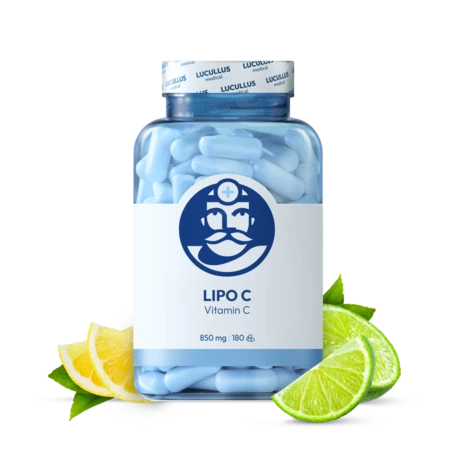
As a result, the vitamin survives the aggressive acidic environment in the stomach, is not broken down by enzymes, and is absorbed directly into the bloodstream and cells. Absorption rates here rise to over 90 per cent. Although at first glance the price may seem slightly higher, this is often the best value for money and the most effective option. What does the liposomal form look like in practice? Take a look at our LIPO C Vitamin C.

What should you look for in the list of additives?
The law requires ingredients to be listed in descending order by weight. The ingredient present in the greatest quantity is listed first.
Purity of ingredients: A premium supplement contains an active ingredient and a minimum number of essential excipients (such as a vegetable cellulose capsule).
Fillers and binders: Ingredients such as microcrystalline cellulose, silicon dioxide or magnesium stearate are common and harmless processing aids. If you find unnecessary colourings (such as titanium dioxide), flavourings or added sugar in tablets intended for daily use, you should be on your guard.
Deciphering a dietary supplement label is no rocket science once you know what to look out for. Don’t be tempted by big numbers and promises on the front of the box – the real value is always written in small print on the back. Investing in your health only makes sense if your body can actually make use of it. Just a few seconds’ attention in the shop or whilst browsing an online store is all it takes to ensure you’re paying for real results, not expensive marketing and empty fillers.