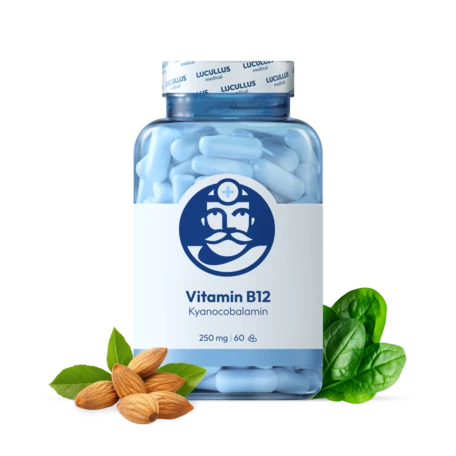
















Vitamin B12 is the most complex vitamin (from a chemical point of view); it contains cobalt, which is essential for its activity. Also known as cyanocobalamin, it plays a part in the proper functioning of the body, and our bodies require it every day. Although we only need it in small amounts, its importance for red blood cell production and metabolism is enormous. Various studies suggest that it has a beneficial effect on our mood and memory, and supports brain function. Vitamin B12 is necessary for maintaining the proper functioning of the nervous system and the metabolism of proteins, carbohydrates and fats. Unlike other vitamins, B12 is synthesised in nature only by bacteria found in the digestive systems of animals. We therefore obtain it mainly from animal products, such as meat and dairy products. Its uniqueness also lies in its ability to be stored in the liver for many years, but a deficiency poses a risk not only to vegans and older people. A B12 deficiency does not manifest itself immediately (it can take up to a year). Fatigue is the first sign of a deficiency in this vitamin. Chronic fatigue, memory problems, tingling in the limbs or depression can be subtle warning signs. As vitamin B12 is essential for the production of myelin, the protective sheath around nerve fibres, a deficiency can lead to neurological problems such as numbness and balance issues. If this deficiency is left untreated, it can lead to serious neurological disorders and anaemia; the deficiency also manifests itself through various haematological and psychiatric symptoms (including confusion and disorientation, atrophy, mood and behavioural changes, psychosis and cognitive problems, loss of concentration, insomnia and incontinence). In the past, pernicious anaemia was incurable. In 1926, two doctors discovered that eating raw liver could alleviate these symptoms – fatigue, memory loss and nerve damage. Two decades later, they succeeded in isolating the substance responsible for this effect, which turned out to be vitamin B12.

Whilst it is true that the ability to absorb vitamin B12 declines with age due to reduced production of stomach acid, a deficiency can also occur in younger people. People over the age of 50 suffer from vitamin B12 deficiency, and the most common cause is an acquired disorder of B12 absorption; 30 per cent of people over 65 are deficient in B12. People with intestinal disorders (coeliac disease) and those with pancreatic disorders are also at risk of deficiency. Pregnant and breastfeeding women are among the at-risk groups due to increased metabolic demands. A prolonged vitamin B12 deficiency in children can cause delayed speech development. Other at-risk groups include people with digestive disorders or those who take certain medicines, drink alcohol or smoke. Furthermore, it plays a role in DNA synthesis, influences mental well-being and helps to lower homocysteine levels, thereby protecting the heart. Vitamin B12 also affects our eyesight. A vitamin B12 deficiency can cause visual disturbances (damage to the optic nerve). It also affects male fertility and has anti-inflammatory effects. It is also suitable for athletes, to build muscle mass, promote muscle growth and strengthen the body overall. It helps prevent muscle cramps and speeds up recovery from overtraining. It plays a vital role in muscle protein synthesis. Furthermore, it soothes itching and redness. Nowadays, vitamin B12 deficiency is no longer just a problem for vegans and vegetarians, but also for those who consume animal products. Symptoms of low levels can vary, ranging from physical to psychological, and include headaches. A common question is whether it contributes to weight loss or weight gain. It is not the case that increasing your levels of this vitamin will cause you to lose weight, but correcting a B12 deficiency boosts your energy levels and regulates your appetite, enabling you to continue with your healthy lifestyle.

Maintaining adequate levels of vitamin B12 has a number of health benefits:
• improves concentration and mental well-being, reduces fatigue and supports the production of red blood cells
• helps protect against cardiovascular disease, and contributes to regeneration and healthy skin and hair
• is the key to a good memory and a strong immune system; it ensures the proper conversion of carbohydrates and fats into energy
Cyanocobalamin is responsible for the proper functioning of neurotransmitters that influence mood and trigger feelings of happiness. With Dr Lucullus and the much-discussed vitamin B12, rediscover the desire to exercise, learn with enthusiasm, or enjoy every minute of your life, without feeling exhausted. It is precisely its complexity that can simply help.