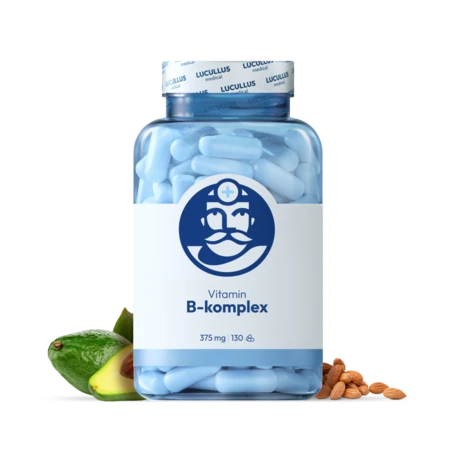
Most people take a B-complex supplement when they feel tired, need to boost their concentration, or want to improve the condition of their hair and nails. As the eight B vitamins help convert food into cellular energy, their link to vitality is fairly well known. However, these substances act as key co-enzymes in hundreds of biochemical processes in the body – and in some of these, they perform roles that very few people are aware of.

Here is an overview of some lesser-known contexts in which the B-complex plays an interesting role:
1. Vivid dreams and better dream recall
Vitamin B6 (pyridoxine) plays a direct role in the conversion of the amino acid tryptophan into serotonin and melatonin. It is precisely these substances that influence sleep cycles and brain activity during the REM phase. People who take vitamin B6 later in the day often experience more intense, vivid dreams and find it easier to recall them upon waking.
2. A slight reduction in attractiveness to mosquitoes
Higher levels of vitamin B1 (thiamine) can slightly affect the way the skin metabolises certain compounds. This results in a subtle change to your natural body odour, which may be slightly less attractive to mosquitoes. It certainly isn’t a substitute for a traditional insect repellent, but as a minor side effect whilst out in the countryside, it can be a pleasant surprise.
3. Supporting nerve regeneration and tingling in the limbs
Vitamins B1, B6 and B12 work together to help maintain the protective sheath around nerve fibres. If the body has a borderline deficiency of these vitamins, taking supplements can help alleviate unpleasant ‘pins and needles’, tingling or mild nerve discomfort. However, the principle of moderation applies here: long-term use of excessively high doses of vitamin B6 can, on the contrary, irritate the nerves.
4. Alleviating the symptoms of premenstrual syndrome (PMS)
Vitamin B6 is essential for the production of neurotransmitters such as dopamine and GABA, which help regulate mood and nervous tension. Clinical observations suggest that targeted supplementation with B6 as part of a balanced regimen may help to alleviate irritability, mood swings or bloating before menstruation.
5. Hearing protection in the event of excessive noise
Scientific studies are also investigating the impact of vitamin B12 and folate (B9) on inner ear health. These vitamins support proper blood flow and nerve function in the auditory system, which means they can play a supportive role in protecting hearing from damage caused by excessive noise as well as from natural age-related deterioration.
6. Monitoring homocysteine levels for heart and brain health
Vitamins B6, B9 and B12 play a role in the breakdown of homocysteine – an amino acid whose elevated levels in the blood are associated with inflammatory processes in the blood vessels, an increased risk of cardiovascular disease and a more rapid decline in cognitive function. An adequate intake of these three vitamins helps to keep homocysteine levels within safe limits.
7. Assistance with the elimination of alcohol by-products
Alcohol consumption rapidly depletes the body’s stores of vitamins B1 and B6, which the liver needs to process acetaldehyde – a toxic substance responsible for most of the unpleasant symptoms experienced after a night out. Whilst taking a B-complex supplement is not a miracle cure for a ‘hangover’, it can significantly aid the body and liver in their subsequent recovery.
8. Neon-yellow urine
This is not a health benefit, but rather a harmless phenomenon that can take an unprepared person by surprise. Vitamin B2 (riboflavin) has a naturally fluorescent yellow-green pigment. As the body only absorbs as much as it currently needs, any excess is excreted via the kidneys – resulting in urine that is strikingly bright, almost neon in colour.

B vitamins are water-soluble, so the body can naturally excrete most of any excess. Nevertheless, the principle that ‘more is not always better’ applies here too. In addition to the aforementioned long-term excess of vitamin B6, high single doses of vitamin B3 (niacin) can cause what is known as a ‘niacin flush’ – a harmless but intense, temporary reddening and sensation of warmth on the skin.
In any case, the B-complex is a dietary supplement, not a substitute for a varied diet, sleep or professional medical care. It works best when taken as part of a healthy lifestyle and targeted care for the body.