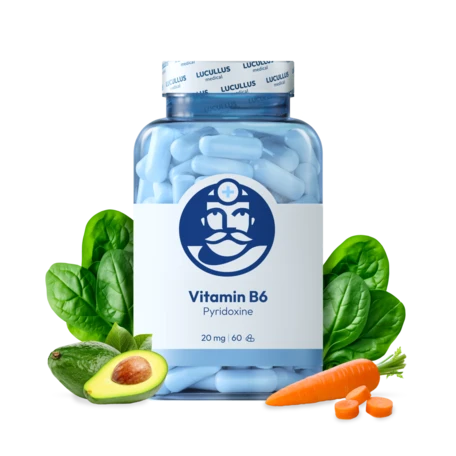
















The term ‘vitamin B6’ is used to refer to three derivatives: pyridoxine, pyridoxal and pyridoxamine. Whichever of these you consume, the active form of this vitamin is pyridoxal-5-phosphate. It is an important cofactor for enzymes. All three forms of vitamin B6 are found in the normal diet and are absorbed directly in the gut. It plays a key role in the metabolism of proteins, fats and carbohydrates. It is involved in more than 100 enzymatic reactions.

Vitamin B6 is found in offal, meat, fish, cereals, pulses, fruit and vegetables. It is essential for the proper functioning of the nervous system, the production of red blood cells and supporting the immune system. An adequate intake is also very important for mental health and hormonal balance, and it plays a significant role in the functioning of the reproductive system.
A deficiency of vitamin B6 – pyridoxine – causes various disorders in the body. These include various neurological disorders, dermatitis, anaemia and vomiting during pregnancy. The deficiency initially manifests as fatigue, skin rashes, dry and chapped lips, mood swings, a weakened immune system, and even brain fog.
There are also various causes of vitamin B6 deficiency: a diet that is too monotonous – low protein intake, reduced absorption of B6 (malabsorption) due to immune disorders, prolonged stress, or physical exhaustion caused by strenuous physical activity. People undergoing dialysis may excrete this vitamin from the body in excessive amounts. Excessive alcohol consumption is also a factor, as alcohol slows down the conversion of vitamin B6 into its active form: pyridoxal-5-phosphate.
If a vitamin B6 deficiency is short-term, it leads to fatigue, irritability and a low mood – as a result of disruption to neurotransmitters. This is accompanied by skin problems and chapped lips. A long-term deficiency leads to serious problems: a weakened immune system, impaired learning ability and memory loss.

Fortunately, vitamin B6 is found in relatively high quantities in foods such as avocados, spinach, bananas, wholemeal products, tofu, lentils, beans, walnuts, pistachios and sesame seeds. Alternatively, you can take it on its own as a dietary supplement, either as part of a B-complex – a combination of B vitamins – or entirely on its own as vitamin B6 (pyridoxine).
The recommended daily intake of vitamin B6 is 1.5 mg for women and 2 mg for men. It is possible to overdose on vitamin B6 if you take high doses over a short period. This can lead to problems with coordination, nausea and dizziness. Symptoms also include photosensitivity – sensitivity to light. Long-term intake of more than 100 mg per day leads to damage to the nervous system and the development of peripheral neuropathy. It is therefore important to use the correct dosage. 15–20 g in a single capsule is the maximum daily dose (as only part of the contents is actually absorbed into the intestines).
It is important to choose a retailer of vitamins and dietary supplements whom you trust and who specialises exclusively in this field, rather than one that also sells thousands of other types of goods.