















Imagine having to run a marathon every single day without a single day off. Your muscles would probably start to protest very quickly, wouldn’t they? It is precisely this same extreme feat, albeit on a much smaller scale, that we demand of our eyes.

From the moment we switch off the alarm on our smartphone in the morning, through an eight-hour shift in front of a computer screen, to unwinding in the evening with our favourite TV series or a book in hand. Our eyes are constantly at work. Sight is our most important sense, through which we perceive up to 80 per cent of the information from our surroundings. Yet we often take it for granted, until a problem arises.
Why do our eyes have to work so hard every day?
There are several reasons why our eyesight is deteriorating or why we feel constantly tired in the modern world. It is not just about staring at screens, although this is certainly one of the most significant factors affecting our vision.
Lack of blinking: We naturally blink about 15 to 20 times a minute. However, when we concentrate on a computer screen, a mobile phone display or even when reading important documents, our blinking rate drops to between half and a third of that. The result? The tear film cannot be replenished quickly enough and the eye dries out.
Blue light: Digital screens emit high-energy blue light that penetrates deep into the eye. Prolonged exposure to this light not only disrupts our sleep cycle, but also contributes to eye strain and may accelerate the ageing of the retina.
Poor lighting and air conditioning: Working in dim light, with glare on the screen from a nearby window, or, conversely, under bright, unnatural fluorescent lighting. Another negative factor is air conditioning or heating, which dry out the air, creating an extremely taxing environment for our eyes.
Constantly focusing on close-up objects: The human eye has evolved to look into the distance. Nowadays, our eyes are constantly working to focus on objects just a few tens of centimetres from our faces, which leads to eye strain and fatigue.
How to tell if your eyes are crying out for help
Tired eyes can make themselves felt in some very unpleasant ways. It’s not always just about your eyesight; your whole body will let you know.
Physical discomfort in the eyes: A burning sensation, itching, redness, or a feeling as though you have sand under your eyelids.
Changes in vision: Blurred or double vision, difficulty focusing (particularly when shifting your gaze from near to far), increased sensitivity to light (photophobia).
Associated symptoms: Chronic headaches, often occurring in the forehead or behind the eyes, and pain and stiffness in the neck, shoulders and back caused by poor posture when looking at a monitor.
Who is most at risk?
Although tired eyes can affect anyone, certain groups of people are much more prone to these problems.
Office workers and IT specialists: People who spend 8 or more hours a day sitting directly in front of a monitor are a high-risk group.
Students: The hours spent poring over textbooks, writing essays on a laptop and then unwinding on social media have a major impact on eyesight.
Professional drivers: They are constantly focusing their attention, keeping their eyes on the road in all weathers and dealing with the glare from oncoming vehicles at night.
Older adults (40+): As we get older, the lens of the eye naturally loses its flexibility and tear production also decreases, making the eyes more vulnerable to strain.

1. Rapid assistance from outside
The key is the 20-20-20 Rule. Every 20 minutes, look at something at least 6 metres (20 feet) away for 20 seconds. This simple exercise will help relax your eye muscles. Also, remember to blink consciously, use good-quality moisturising eye drops and adjust the brightness and contrast on your screens.
How can I look after my eyesight?
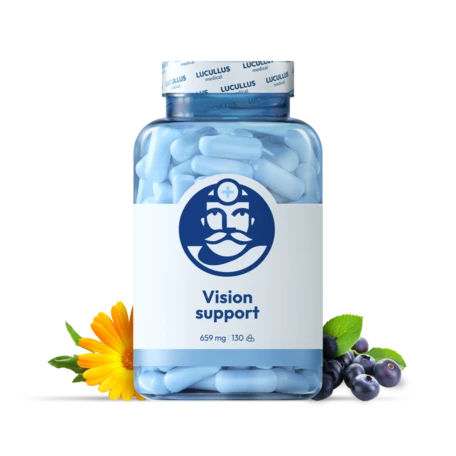
The good news is that we can do a lot to support our eyesight. You don’t need to change jobs straight away; simply incorporate a few simple yet effective steps into your daily routine and give your eyes the right nutrition with Dr LUCULLUS’s Vision Support product.
2. Supporting eye health from within
Many people only address eye strain from the outside, but forget that the eye is an organ that requires a huge amount of nutrients to function properly. The modern diet often lacks sufficient nutrients to protect our eyes from oxidative stress and blue light. This is where targeted dietary supplements for eye health come in; they should be a regular part of the daily routine for anyone who strains their eyes.
Our premium Dr. LUCULLUS Eye Support complex is formulated with high-quality ingredients that support your eyesight from within and provide them with the nutrients they need:
Vitamin A (beta-carotene): It is absolutely essential for the proper functioning of the retina, particularly for vision in low light and in the dark. A vitamin A deficiency is the main cause of the uncomfortable condition known as dry eye syndrome.
Calendula (a source of lutein and zeaxanthin): This vibrant flower is quite literally a natural miracle for eyesight. It is a source of the antioxidants lutein and zeaxanthin, which act as ‘internal sunglasses’ within the eye. They filter out harmful blue light and protect the retina from ageing.
Vitamin B2 (Riboflavin): Plays a significant role in maintaining good eyesight. It helps protect eye cells from oxidative stress and is important for the proper functioning of the cornea, thereby reducing eye strain.
Vitamin C (ascorbic acid): A powerful antioxidant that is essential for collagen production. Collagen ensures the strength and elasticity of the fine blood vessels that nourish the entire eye.
Grape extract: Contains highly effective substances that promote healthy blood circulation in the eye. Good blood circulation ensures that the cells of the eye are better supplied with oxygen and nutrients, which is crucial given the strain they are under throughout the day.
Fennel: A traditional herb that has been popularly used for eye care for centuries. It contains important essential oils and antioxidants, helps to soothe irritation and naturally refreshes tired eyes.
Common blueberry: Extract from this fruit aids microcirculation, strengthens capillaries and promotes the regeneration of eye cells.
Looking after your eyesight shouldn’t only start when you find you can’t even read a price tag in a shop in the evening without feeling a stinging sensation in your eyes. A combination of good working habits, regular breaks and the high-quality dietary supplement ‘Eye Support’ from Dr LUCULLUS will provide excellent support for your eyes and supply them with the nutrients they need. After all, we only have one pair of eyes, so let’s give them the care they deserve for their daily efforts.