















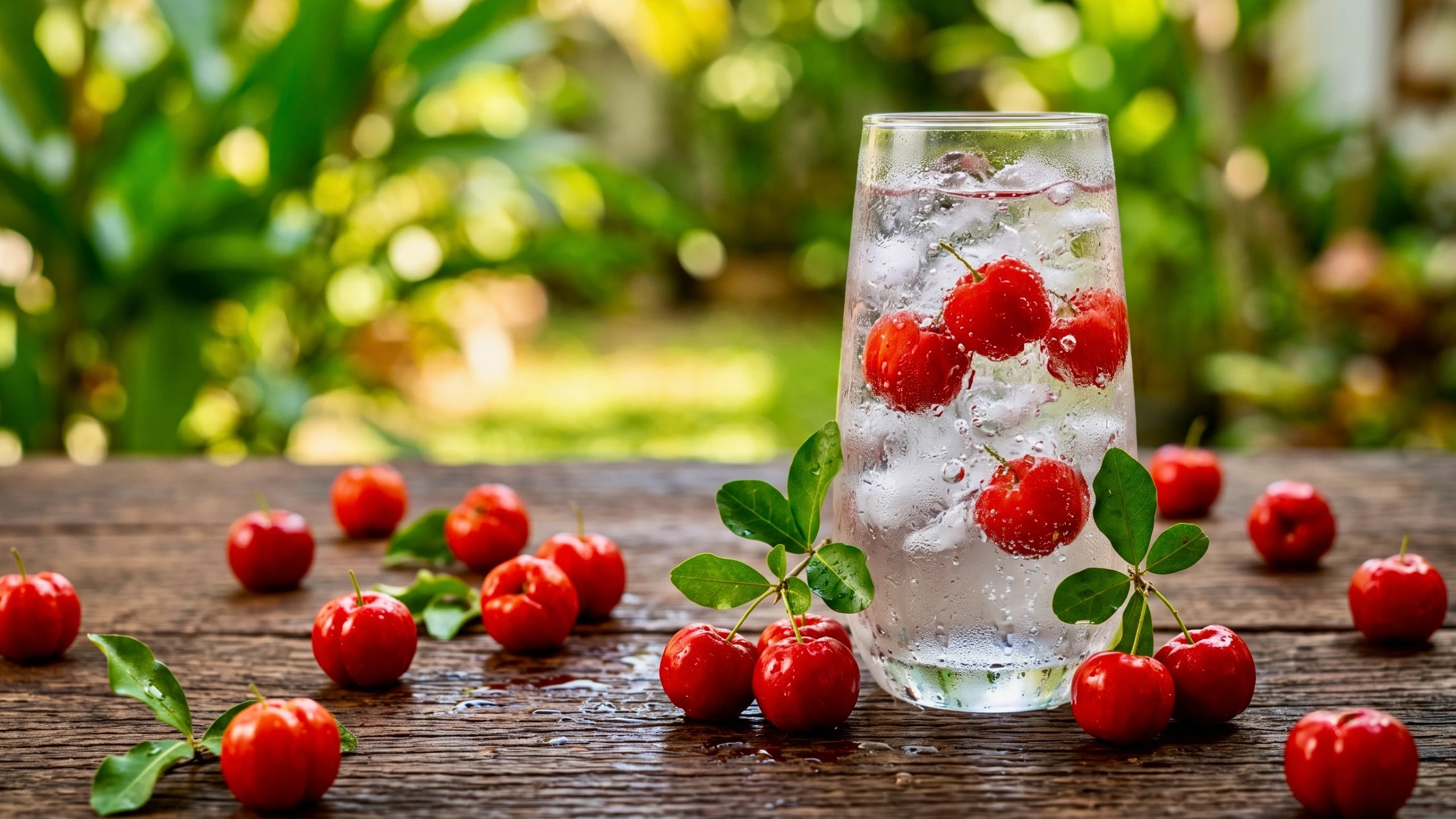
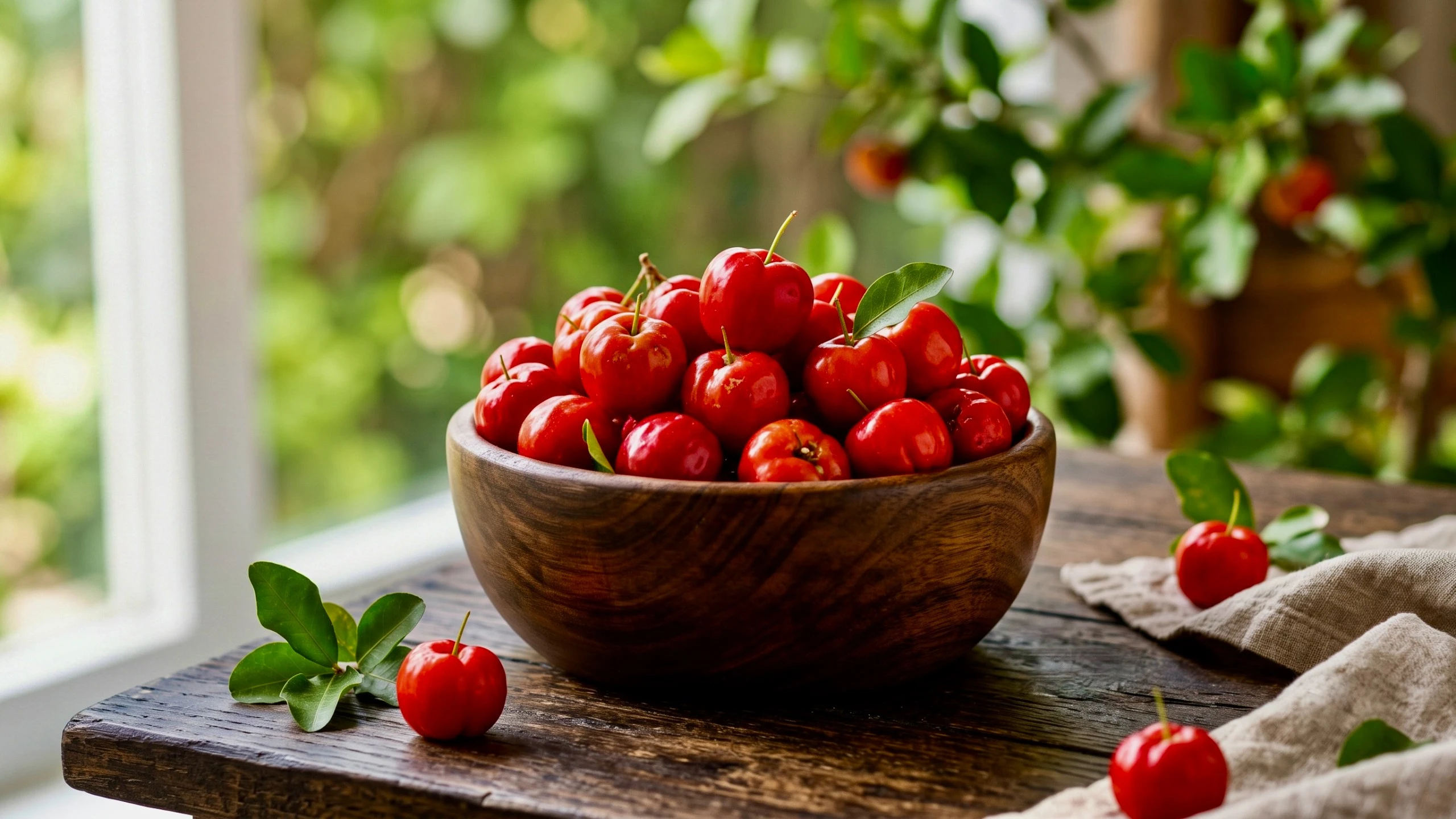
Acerola, also known as the Barbados (West Indian) cherry, is an exotic fruit shrub that occasionally grows to the size of a tree (2–5 metres). This evergreen species, native to the tropical regions of South and Central America, is known not only for its attractive appearance but, above all, for its unique properties and high vitamin content. The acerola fruit is a small drupe weighing up to 15 g, which resembles a cherry in shape but has a much more sour taste. It ripens extremely quickly – in just 23 days – and is gaining attention thanks to its tart flavour, which gradually becomes sweeter. Interestingly, the rule ‘the riper, the better’ does not apply to acerola, as it is the less ripe fruits that contain the highest levels of nutrients. Acerola can be found under the Latin names Malpighia glabra, emarginata and punicifolia. It contains an extremely high amount of vitamin C, which even exceeds that found in rose hips.
A clinical study involving healthy volunteers has shown that vitamin C from acerola is absorbed more effectively by the body and is excreted more slowly than the synthetic form, thanks to the presence of polyphenols and bioflavonoids. This means that your immune system functions more effectively throughout the day. Furthermore, acerola is rich in vitamins B1, B2 and B3, iron, phosphorus, calcium and phenolic compounds, which are powerful antioxidants. B vitamins support metabolism, whilst carotenoids have a beneficial effect on eye and skin health. As well as vitamin C, acerola is high in vitamin A, potassium, anthocyanins and phenolic acids – all plant compounds that play a role in supporting immune health. Acerola is known for its wide-ranging health benefits.
A powerful antioxidant: its high vitamin C and polyphenol content helps to neutralise free radicals. The antioxidants in acerola help to detoxify the liver and reduce damage to liver cells caused by toxins and medicines. Immune support: vitamin C boosts white blood cell production, which improves resistance to infections. Healthy skin: acerola supports collagen production, improves skin elasticity and reduces wrinkles. Acerola extracts protect the skin from UVB radiation. Thanks to its high vitamin C content, it supports collagen synthesis, thereby slowing down skin ageing. If you’re looking for a beauty boost from within, acerola is the best choice. Heart protection: it helps lower cholesterol levels and blood pressure, which contributes to cardiovascular health. Antibacterial effects: it can combat certain bacteria and viruses. Support for metabolism and liver health: it contributes to better regulation of blood sugar levels and the body’s detoxification. Its carotenoid and polyphenol content slows down cellular ageing. Acerola has a positive effect on gut flora – the polyphenols in acerola promote the growth of beneficial bacteria (e.g. Lactobacillus and Bifidobacterium). Improved digestion leads to better immunity, mood and energy levels.
Unripe acerola fruits contain up to 4,500 mg of vitamin C per 100 g, which is one of the highest levels found in fruit. Polyphenols and carotenoids are responsible for its powerful antioxidant effect, which helps protect cells from oxidative stress. Due to its rapid perishability, acerola is processed into extracts, dried or used as a base for dietary supplements. In the food industry, it is used to produce natural pigments. In traditional medicine, it is known as an adaptogen, which helps the body cope better with stress. It is precisely from acerola’s antioxidant effect that we can deduce several beneficial effects on the human body, confirmed by studies: promoting health and maintaining proper heart and blood vessel function, regulating blood sugar levels, protective effects on the liver, anti-cancer and anti-inflammatory effects, and anti-ageing effects. Acerola is low in sugar and has a low glycaemic index, which is beneficial for those who wish to maintain stable blood sugar levels. Quite simply, a ‘SUPERFRUIT’ – a safe and effective gift of nature that deserves a place in every home.