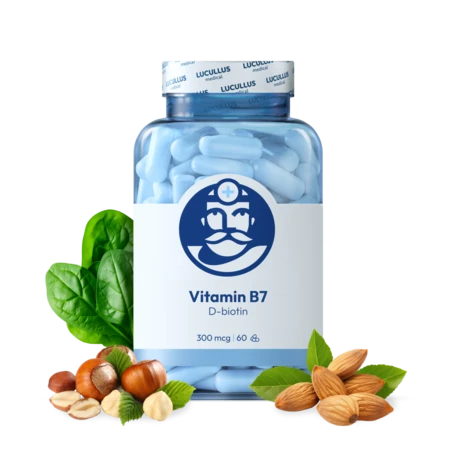
















You may be familiar with vitamin B7 by several names. It is best known as biotin. But it is also called coenzyme R or vitamin H. The ‘H’ is derived from the German word ‘Haut’, meaning skin. This is because this vitamin has a major impact on our body’s largest organ – the human skin.

Biotin, also known as vitamin B7, has a positive effect on hair, skin and nails. However, its benefits extend beyond health and beauty – this vitamin is essential for the proper functioning of enzymes that aid in the metabolism of fats, carbohydrates and amino acids. It also helps regulate blood sugar levels and supports the proper functioning of the nervous system. Last but not least, it promotes the production of sex hormones, which may influence fertility.
B7 is important for proper metabolism and energy production. This is one reason why it (along with the rest of the B vitamins: the B-complex) can help with weight loss and in maintaining sufficient energy levels. As it is most commonly associated with the skin and hair, it should be taken by people with problem skin, hair loss, or issues with nail growth and condition (brittleness, fragility). It helps with eczema and skin problems. It prevents dandruff and is said to prevent hair from turning grey.
It is beneficial during antibiotic treatment, helps maintain the health of the mucous membranes and also supports proper mental function. A vitamin B7 deficiency is characterised mainly by rashes on the face, hair loss and a tingling sensation in the limbs. A deficiency can also cause fatigue and mental health problems.
A severe deficiency can even lead to neurological disorders. In experiments, it is possible to induce a vitamin B7 deficiency by frequently consuming raw eggs! Egg white contains the protein avidin, which neutralises biotin and forms an inactive complex that is excreted from the body via the digestive system.

Conversely, high doses of vitamin B7 (more than 30 mg a day) can distort the results of blood tests relating to thyroid function and may even mimic Graves’ disease (a thyroid disorder). Therefore, take care to ensure the correct dosage. The recommended daily dose is just 0.2 mg.
Biotin B7 is an essential nutrient that is commonly found in food, and a severe deficiency can be caused, for example, by prolonged starvation. Scientists believe that even our gut bacteria are capable of producing biotin themselves. Because of the small amount we consume each day, it is relatively difficult to diagnose a deficiency medically (this is done by measuring its excretion in urine).
Biotin is present in very small amounts in many foods, but its content is highly dependent on how they are processed. If you wish to obtain it naturally, higher amounts are found in cashew nuts, yeast, chicken and beef liver, and peanuts... If you suspect you may be deficient in biotin, fortunately you can order it as a dietary and vitamin supplement from reputable retailers who deal specifically in dietary supplements and specialise in them.