















Do you know that feeling when you don’t feel quite yourself, but can’t quite put your finger on why? You wake up in the morning feeling drained, your favourite jeans suddenly feel too tight, and even the smallest thing can drive you round the bend. We often put these feelings down to being overworked, bad weather, getting on in years or just general tiredness.

The real culprit, however, is often hidden deeper within. The hormones in our bodies act as managers, regulating sleep, mood, metabolism, skin quality and appetite. If even just one of them gets out of sync, the whole system loses its natural harmony.
Here are 7 subtle signs your body uses to tell you it’s time for a hormonal reset:
1. Fatigue that not even a third coffee can shake off
Have you slept for eight hours, yet wake up feeling just as exhausted as if you’d spent the night moving furniture? If you’re overcome by ‘brain fog’ in the afternoon and can’t imagine getting through the day without caffeine or sugar, the problem may not be a lack of sleep. It could be a reaction to chronically elevated cortisol (the stress hormone), a thyroid imbalance, or a drop in oestrogen and progesterone levels.
2. The number on the scales is going up, even though you’re still eating the same amount
You eat in moderation and keep active, yet the needle on the scales stubbornly creeps upwards – particularly around your tummy and hips. Unexplained weight gain or a feeling of bloating may not just be down to a lack of willpower. It may be down to a hormonal imbalance, particularly fluctuations in oestrogen, insulin and progesterone levels, which have a significant impact on metabolism and water retention in the tissues.
3. An emotional rollercoaster
From joy to tears for no apparent reason within ten minutes. Or sudden irritability, when even the way your partner breathes gets on your nerves. Mood isn’t just a matter of mindset; it’s closely linked to serotonin, the production of which depends directly on the levels of female hormones. Severe PMS or perimenopausal mood swings are a clear cry for inner stability.
4. Acne in adults
Do you struggle with deep, painful spots on your chin, jawline and neck before your period? Unlike ordinary acne, this cystic form is usually caused by a surplus of androgens or an imbalance between oestrogen and progesterone, which stimulates the sebaceous glands to become overactive.
5. Hair in the drain and brittle nails
Have you noticed that your hairbrush is fuller than usual and that your hair is losing its shine and volume? Hair follicles are extremely sensitive to hormonal changes. A drop in female hormones, an imbalance in the thyroid gland or fluctuations in DHEA levels can weaken both hair follicles and the structure of your nails.
6. Waking up during the night and restless sleep
Do you fall asleep easily, but find yourself suddenly awake between 2 and 4 am with a racing heart or a hot flush? Waking up at night often signals a drop in blood sugar accompanied by a surge in cortisol, or possibly a drop in progesterone – a hormone that has natural calming effects.
7. An irregular, exhausting cycle
A cycle that is too short, disproportionately long or painful, accompanied by severe cramps and bloating, is not a ‘normal part of being a woman’ that you have to endure in silence. Your period is a sort of fifth vital function – if it isn’t running smoothly, your body is telling you that it’s under stress.

How can we restore the body’s lost harmony?
Resolving a hormonal imbalance rarely involves just one isolated step. The body needs comprehensive support:
Balance your diet: Treat yourself to healthy fats (avocados, nuts, olive oil), plenty of protein and fibre, which promotes healthy digestion and the natural elimination of hormone metabolites.
Manage chronic stress: When the body is fighting for ‘survival’ under stress, reproductive and regulatory processes are sidelined. Even 15 minutes of a gentle walk, breathing exercises or limiting blue light before bed can help.
Opt for targeted natural ingredients: Nature offers tried-and-tested plant extracts that can bring relief to a woman’s body without the need for aggressive interventions.
An ally for every day: Wild Yam and Women’s Balance
If you are looking for a natural way to support your feminine wellbeing, Wild Yam (Dioscorea villosa) is a tried-and-tested choice. In traditional herbal medicine, it is valued for its natural content of plant saponins (particularly diosgenin) and phytonutrients, which help to alleviate the unpleasant symptoms of hormonal fluctuations, support a regular cycle and contribute to well-being during the menopause and PMS.
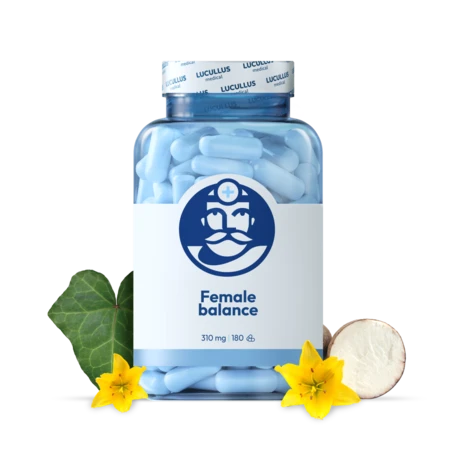
It is precisely on this principle that Dr Lucullus’s ‘Women’s Balance’ supplement is based, combining two effective ingredients:
Standardised Wild Yam extract: Gently regulates the female cycle and helps to promote menstrual comfort and mental balance.
Innovative PQQ (pyrroloquinoline quinone): It acts at a cellular level as a powerful antioxidant and protects the mitochondria – the ‘powerhouses’ of the cells – thereby promoting vitality and sustained energy throughout the day.
Rather than tackling each problem individually (face cream for your skin, coffee for tiredness, a painkiller), you’ll be providing your body with gentle support from within.
Your body isn’t working against you. These signals aren’t a sign of failure, but a plea to slow down and pay attention. Treat yourself to the care you deserve.
Please note: This article is for information purposes only and is not a substitute for a professional medical diagnosis or treatment. If you are experiencing long-term and significant fluctuations in your menstrual cycle or other health problems, please consult your gynaecologist or endocrinologist.